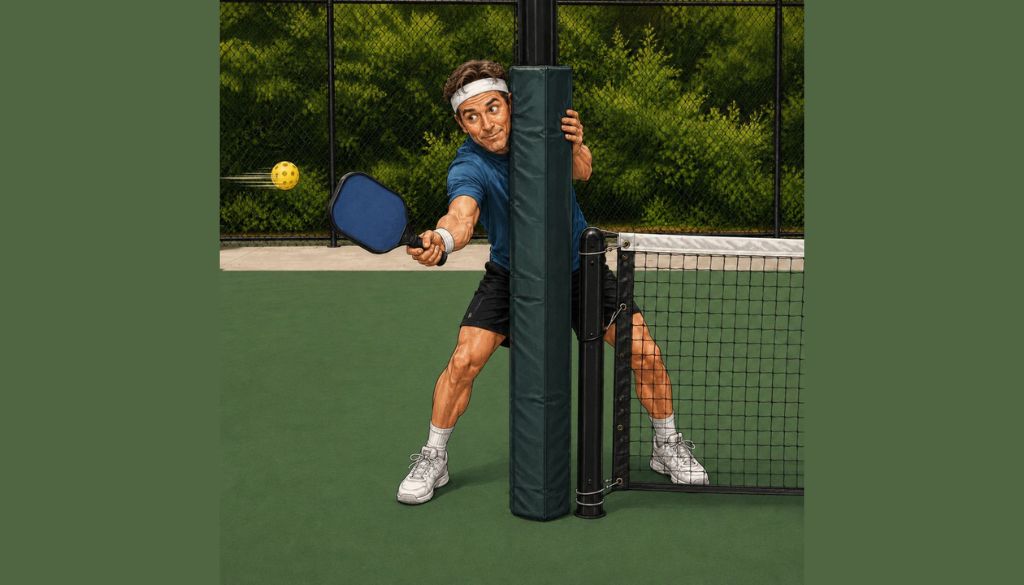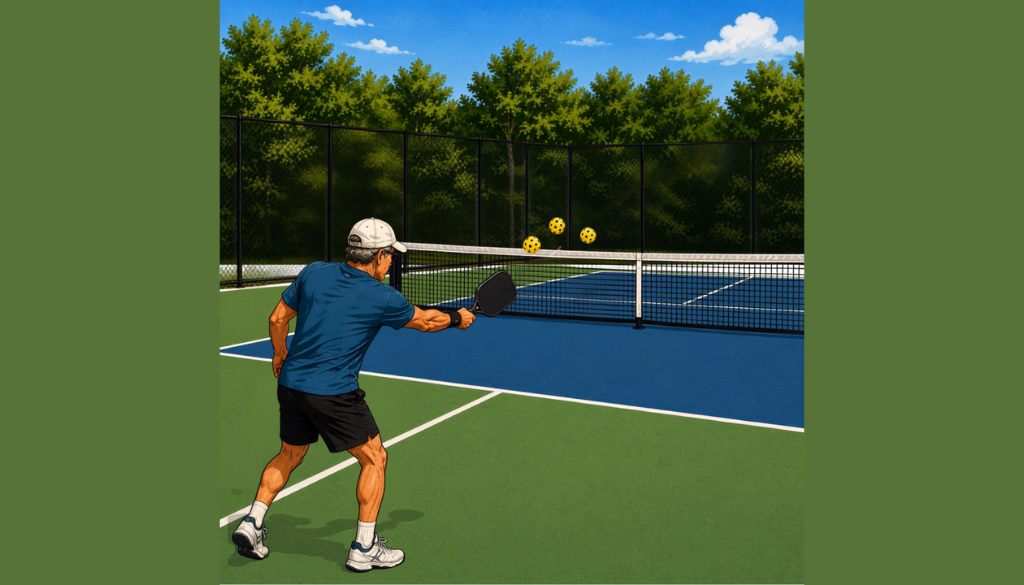


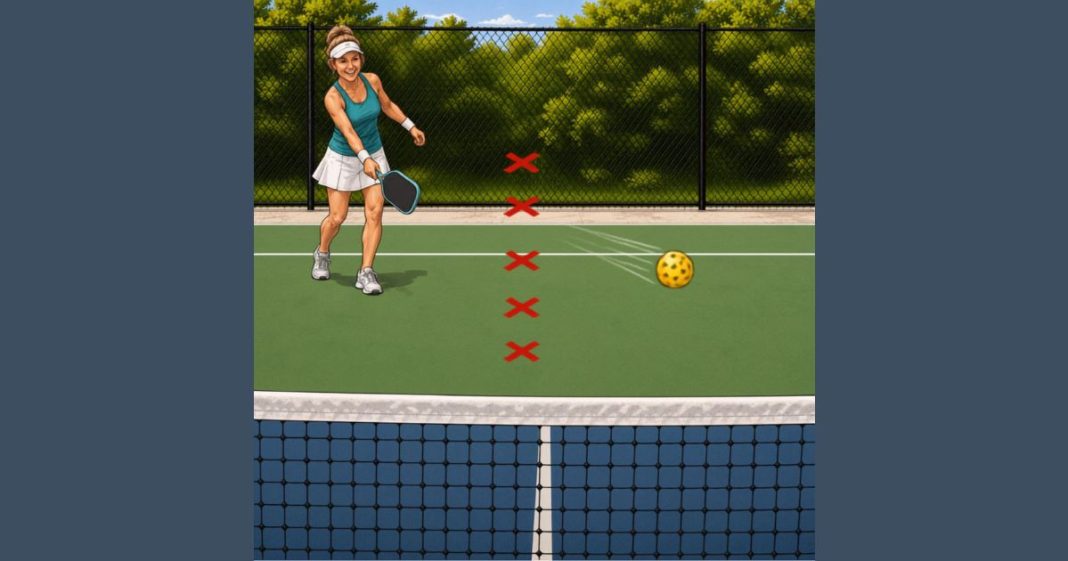
There’s something satisfying about hitting a perfect third-shot drop.
The ball clears the net with just enough height, lands softly in the kitchen, and forces your opponents to hit up instead of down.
Mission accomplished.
Or so you think.
The truth is, the drop isn’t the end of the play.
It’s the beginning of the next one.
Many players work incredibly hard to learn a quality third-shot drop, only to give away the advantage immediately afterward. The drop did exactly what it was supposed to do—it bought them time and created an opportunity to move forward. Unfortunately, what they do next often erases all of that good work.
If you’ve ever hit a beautiful drop and still lost the point a shot or two later, one of these mistakes may be the reason.
Mistake 1: Sprinting to the Kitchen
A good drop should buy you time. Many players use that time to sprint.
As soon as the ball leaves their paddle, they charge toward the kitchen with their eyes locked on the flight of the ball. The problem is that they’re still moving when their opponents make contact. That’s when volleys get jammed into their feet or driven past them.
Instead of thinking “run,” think “advance.”
Move forward behind your shot, but be prepared to stop before your opponents hit the ball. A well-timed split step allows you to react from a balanced position instead of trying to hit while still in motion.
A perfect drop doesn’t give you permission to sprint. It gives you permission to move under control.
Mistake 2: Assuming the Rally Is Neutral
A quality drop often forces your opponents to hit upward, but that doesn’t automatically mean you’ve won the exchange.
Many players mentally relax after seeing a good drop land. They assume the difficult part is over and that reaching the kitchen is simply a matter of taking a few more steps.
The stronger mindset is to expect one more difficult ball.
Good opponents can still hit an excellent reset, roll volley, or controlled drive from below net height. If you’re already assuming you’ve earned the kitchen, you’ll often be surprised by the next shot.
Treat the first ball after your drop as part of the transition, not the reward for completing it. Even a perfect drop may only buy you one or two controlled steps forward—not an automatic neutral rally.
Mistake 3: Forgetting to Improve Your Position
The purpose of a third-shot drop isn’t simply to get the ball into the kitchen.
It’s to improve your court position.
That means every step after the drop should leave you in a better place than the step before it.
Sometimes you’ll make it all the way to the kitchen. Sometimes you’ll only reach the middle of the transition zone before you need to stop and play another ball.
That’s perfectly normal.
Progress is measured by improving your position, not by reaching a specific line as quickly as possible.
The best transition players are constantly asking themselves one question:
“Am I in a better position than I was one shot ago?”
If the answer is yes, the drop is doing its job.
Mistake 4: Attacking the First Ball You Can Reach
After working hard to get to the kitchen, many players feel like they should immediately become aggressive.
That’s often where the rally slips away.
Just because you’ve reached the non-volley zone doesn’t mean every ball is attackable.
If the next ball is below net height or forces you to reach, the better play is often another dink or reset.
Strong players don’t attack because they’ve arrived at the kitchen.
They attack because the ball deserves it.
Those are very different things.
Patience here often earns a much better opportunity one or two shots later.
Mistake 5: Stopping the Pattern Too Soon
The biggest mistake isn’t technical.
It’s strategic.
Many players think of the third-shot drop as a single shot.
Stronger players think of it as the first step in a sequence.
The drop creates an opportunity to advance. Advancing allows you to stabilize your position. Once you’re balanced and in control of the kitchen, you wait for a ball that truly earns an attack.
Each shot builds on the one before it.
When you begin thinking in sequences instead of individual shots, the game slows down. You’re no longer trying to win the point with the drop. You’re using the drop to build the point.
That’s a completely different mindset.
Drill: Drop, Advance, Stop
This drill teaches what happens after a successful drop.
Setup
- One player starts at the baseline.
- One player starts at the kitchen.
Rules
The baseline player hits a third-shot drop and advances under control. Instead of trying to reach the kitchen immediately, they must split step before the kitchen player makes contact. The rally continues until the baseline player either reaches the kitchen under control or loses the point.
Focus On
- Moving behind the drop instead of chasing it.
- Stopping before your opponent contacts the ball.
- Advancing only when you’ve earned the next step.
- Staying patient if another reset is needed.
- Expecting at least one more difficult ball after your drop before the rally truly becomes neutral.
This drill quickly teaches one of the biggest lessons in pickleball: a successful third-shot drop isn’t a single shot.
It’s the beginning of a pattern.
Final Thoughts
A perfect third-shot drop doesn’t win many points by itself.
What it does is create possibilities.
It gives you time to move forward. It encourages your opponents to hit from a more difficult position. It shifts the rally in your favor.
The players who take advantage of that opportunity are the ones who think beyond the drop itself.
The next time you hit a beautiful third-shot drop, resist the temptation to admire it.
Instead, ask yourself one simple question:
“What’s my next smart move?”
Because more often than not, that’s where the point is actually won.