

The third-shot drop gets plenty of attention in pickleball, and for good reason. A well-executed drop can neutralize the serving team’s disadvantage, give both partners time to move forward, and start turning the rally in your favor.
Most instruction focuses on the swing itself. Players work on soft hands, paddle angle, and trying to land the ball in the kitchen. Those details matter, but they are only part of the picture.
By the time the paddle meets the ball, much of the shot has already been decided. Strong players do not just make better swings. They arrive at contact in better position, with better balance, and with a clearer idea of what the ball is asking them to do.
Here are five things that should happen before the paddle ever touches the ball.
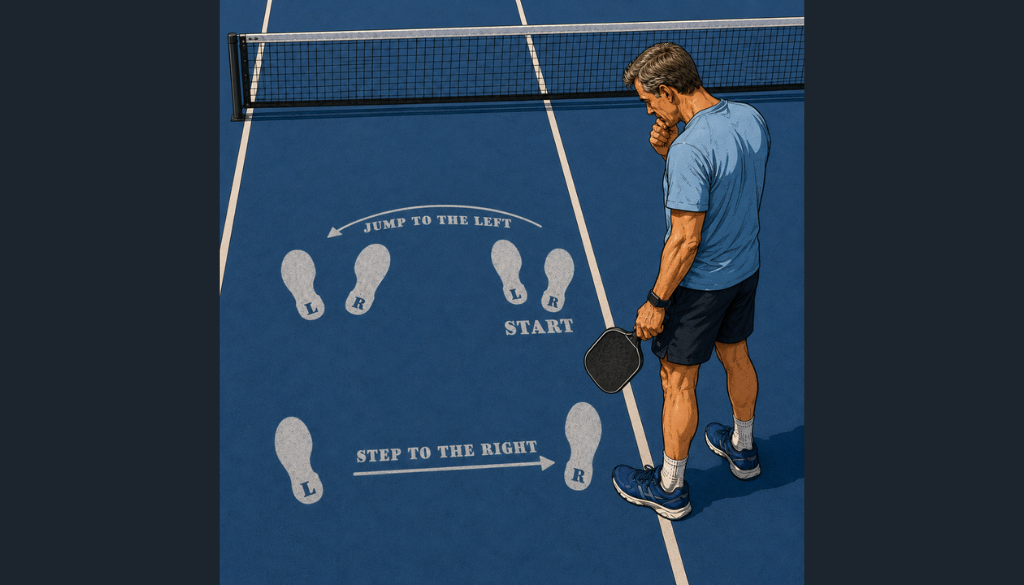
1. Move Your Feet Before You Move Your Paddle
One of the most common mistakes is letting the paddle prepare while the feet are still trying to catch up.
The ball is already on its way, but the player is still shuffling into position. The swing becomes a last-second rescue instead of a controlled motion.
The feet should do most of the work before the swing begins. Small adjustment steps create spacing, letting the paddle travel naturally instead of reaching for the ball.
A lot of “bad” drops are really just “late” feet.
2. Prepare the Paddle Early
Good players rarely wait for the ball to arrive before they set their paddle.
As soon as they recognise that a third-shot drop is the right choice, the paddle starts moving into a comfortable ready position. That early preparation removes extra motion and lets the player focus on the ball instead of rushing the swing.
Late preparation often creates tension. Players feel hurried, grip the paddle tighter, and lose the relaxed touch that makes quality drops possible.
The goal is not to move faster. The goal is to take out movements that do not need to happen.
3. Track the Ball All the Way Into Contact
Many players stop truly watching the ball sooner than they realise.
As contact approaches, their attention shifts toward the opponents, the kitchen, or where they hope the ball will land. Even a quick glance away can make contact less consistent.
Skilled players stay with the ball until it leaves the paddle. That does not mean staring at it forever. It means letting the eyes finish their job before looking ahead to the next part of the rally.
Reliable contact usually starts with reliable visual focus.
4. Create Comfortable Spacing
Players often think about where the ball should land but forget about where it should be struck.
If the ball gets too close to the body, the swing is cramped. If it drifts too far away, the player reaches and loses control. Neither position produces many quality drops.
Good spacing lets the arms move naturally while the body stays balanced. Sometimes that means taking one extra adjustment step instead of forcing a difficult contact point.
One more step often makes the swing feel much easier.
5. Stay Balanced Through Contact
Balance is the final piece that ties everything together.
Many players are still charging forward as they hit the drop. Others lean backward because they reached for the ball. In both cases, the body is working against the shot instead of supporting it.
The best drops usually come from stable positions. The feet have settled, the body is under control, and the player can swing without fighting their own momentum.
Balance also prepares you for what happens next. A good third-shot drop is only the start of the rally. Being under control at contact makes it much easier to move forward, react to the next ball, and keep earning position.
The Mistake
Players often assume a better third-shot drop comes from changing the swing.
Sometimes it does. More often, the swing is trying to rescue something that went wrong earlier. Poor spacing, rushed footwork, late paddle preparation, or off-balance contact force the hands to solve problems that should have been solved with the feet.
Improving what happens before contact often improves the drop without changing the stroke at all.
Drill: Build the Drop Before You Hit It
This drill shifts the focus from the swing to the preparation.
One player begins at the baseline while a partner stands at the kitchen and feeds easy returns. Before every drop, the baseline player should consciously check five things:
– Feet under control
– Paddle prepared
– Eyes on the ball
– Comfortable spacing
– Balanced at contact
After each shot, resist the temptation to judge whether the ball landed perfectly. Instead, ask whether all five pieces were in place before contact.
After ten repetitions, switch roles. Most players discover that once the preparation becomes more consistent, the quality of the drop improves without thinking nearly as much about the swing itself.
Final Thoughts
The third-shot drop begins long before the paddle touches the ball.
The swing gets most of the attention, but it is often the final step in a sequence that has already decided the outcome. Better footwork, earlier preparation, better spacing, steadier balance, and disciplined ball tracking all make the swing simpler.
Players who consistently hit quality drops are usually not making last-second corrections. They have already done the work before the ball reaches the paddle. That is what allows the drop to look so effortless.