

Most points aren’t lost to great shots—they’re lost because the rally speeds up and players start rushing their contact. The ball comes back faster, the feet get lazy, and suddenly a simple reset turns into a net error or a pop-up.
The players who win more often aren’t necessarily the ones with the biggest swings or the fastest hands. They’re the ones who look like the game is moving in slow motion. They aren’t calmer because of their personality; they’re calmer because of what they do before the ball even gets to them.
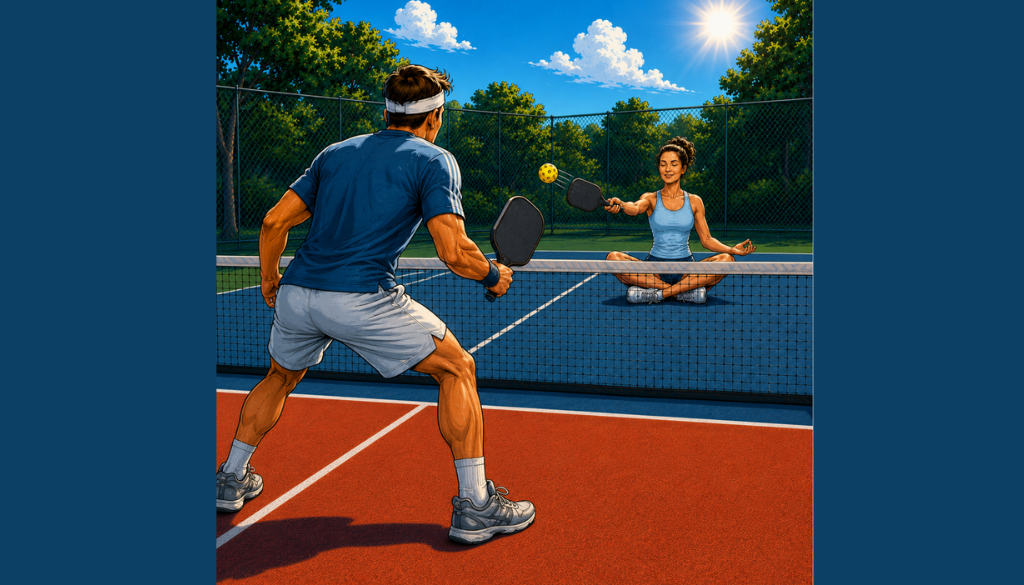
Calm on the court isn’t a feeling. It’s a set of visible habits you can copy.
What “calm” actually looks like
If you watch the most controlled players at your club, you’ll see the same things every time:
- They’re balanced before they hit.
- Their paddle is already up and out front.
- Their swings stay compact, even on fast balls.
- They choose neutral, high-percentage shots instead of forcing offense from bad positions.
None of this is magic. It’s preparation. Calm players build margin into their game so they don’t have to panic when the pace picks up.
The first breakdown: rushing the contact
When the game speeds up, the first thing to go is timing. Players start:
- Swinging bigger to “make something happen.”
- Reaching with their arm instead of moving their feet.
- Trying to win the point from a ball that should just be reset.
The correction is simple but not easy:
- Set up earlier.
- Keep contact out in front of your body, not off your hip or behind you.
- Simplify the shot. If the ball is low or you’re off balance, your job is to make the ball unattackable, not to end the rally.
Calm starts with controlled contact. If you’re late, everything after that gets messy.
The second breakdown: attacking balls that aren’t attackable
A lot of rushed points come from trying to turn a red-light ball into a winner. Use this as a quick filter:
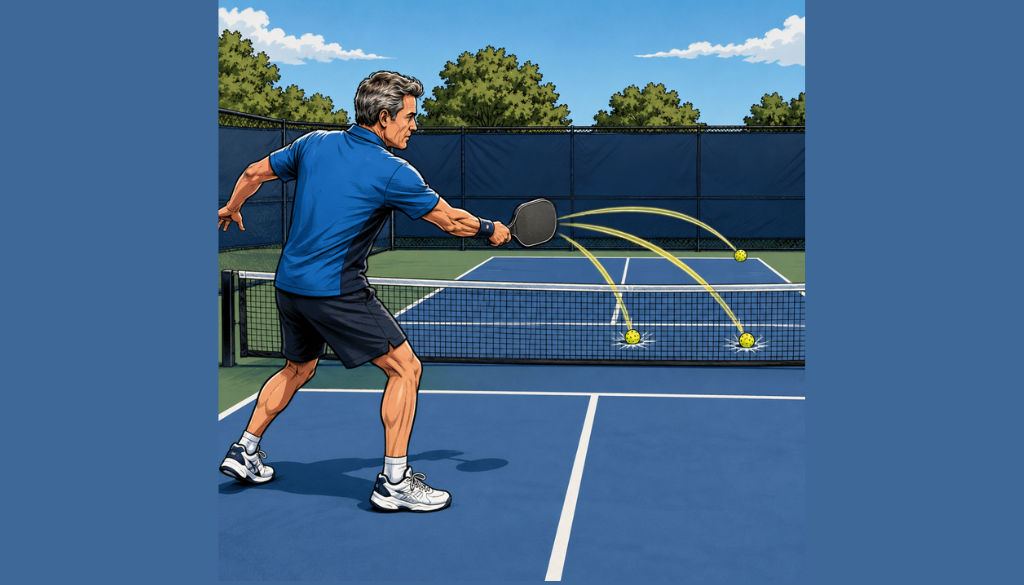
- Below net height: Your job is to reset, lift with margin, or dink. No attacks.
- At or slightly above net height, and you’re balanced: You can choose a controlled attack—soft roll, firm reset to the feet, or a patient drive through the middle.
- Clearly above net height, good position: Now you can be more aggressive, but still with shape and control, not a blind blast.
Calm players let points develop. They don’t force speed-ups from balls that don’t deserve it. That alone cuts a huge chunk of unforced errors.
The third breakdown: late feet create panic hands
When your feet are late, your hands try to save you. You’ll see:
- Drifting into shots instead of setting early.
- No split-step before the opponent’s contact.
- Off-balance contact, which leads to net errors or pop-ups.
Calm players do the opposite:
- They split-step as the opponent makes contact.
- They take small adjustment steps so their body is behind the ball.
- They stop before they hit, even if it’s just for a fraction of a second.
Calm hands come from stable feet. If your lower body is organized, your upper body can stay quiet.
One more detail: in the transition zone, calm players keep moving forward behind their shot. They don’t stop to watch it. Their feet keep working so they’re never late to the kitchen.
How calm players slow the game down
Calm doesn’t mean passive. It means choosing neutral over risky when the situation calls for it. Under pressure, controlled players:
- Use resets instead of counters when the ball is fast and low.
- Favor the middle to reduce angles and give themselves more margin.
- Keep the ball unattackable instead of “trying something” clever.
The result is that their opponents start feeling rushed, not them. The rally might be fast, but the calm player’s rhythm stays steady.
What calm players don’t do
It’s also useful to name the behaviors that break calm:
- They don’t rush between shots. They use the time to reset their stance and paddle.
- They don’t swing harder when pressured. They keep swings compact and let the opponent’s pace do some of the work.
- They don’t attack balls that aren’t truly attackable. They’re willing to extend the rally instead of gifting a point.
If you remove those three habits, you instantly look and feel more in control.
Simple in-game cues
You don’t need a mantra for everything. Just a few short cues that point you back to structure:
- “See it early.” (Get your eyes on the ball sooner.)
- “Small swing.” (Keep the backswing compact.)
- “Get set first.” (Feet before hands.)
- “Nothing fancy here.” (Choose the high-percentage shot.)
Use one of these when you feel the rally speeding up. They’re not motivational; they’re mechanical redirects.
One more cue to add: keep your grip pressure the same whether the ball is easy or fast. If your hand tightens, your swings get big and your decisions get risky. Calm players hold the paddle the same way on shot one and shot twenty.
A drill to train calm under pressure
This partner drill makes “staying calm” concrete.
Setup:
- One player at the kitchen, one feeding from the middle of the court or opposite kitchen.
- Feeder starts with soft, manageable balls.
Rules:
- The player must maintain posture, compact swings, and neutral decisions.
- Any time they speed up a below-net ball, lose balance, or take a big swing out of panic, the rally resets.
- Goal: 10 clean, controlled shots in a row without a reset.
Progression:
- Feeder gradually increases pace and angle.
- Add movement: feeder sends balls short, deep, and wide, but still within reason.
- Add disguise: feeder mixes resets and light speed-ups so the player has to read, not just react.
The point isn’t to survive a barrage. It’s to stay structured as speed increases. If you can keep your shape and shot selection clean at full pace, you’ve trained real calm.
How this changes your game
When you build these habits, a few things happen:
- Your unforced errors drop, especially in fast rallies.
- Your hand battles at the kitchen get cleaner because you’re not arriving late and flailing.
- Your positioning becomes more predictable to your partner and more frustrating to your opponents.
- The other team starts feeling rushed, even though you’re the one controlling the tempo.
Calm isn’t just composure. It’s a competitive advantage. The players who look like they have all the time in the world aren’t lucky—they’ve built a game that creates time. That’s the kind of calm that wins more points.