

Few shots in pickleball get more attention than the around-the-post (ATP).
When someone pulls it off, play usually stops for a moment. Players smile, spectators clap, and everyone talks about how difficult the shot must have been.
What you don’t see are the dozens of ATP attempts that miss into the net, sail out of bounds, or never should have been attempted in the first place.
That’s because the hardest part of an ATP isn’t hitting it.
It’s recognizing when the opportunity actually exists.
The Around-the-Post Builder teaches players to stop chasing low-percentage ATPs and start recognizing the situations that naturally create them. Instead of forcing the shot, you’ll learn how to let the opportunity develop and then take advantage of it when the odds are in your favor.
Why This Drill Matters
Many recreational players think an ATP is simply another shot they should add to their game.
In reality, it’s usually the result of a sequence.
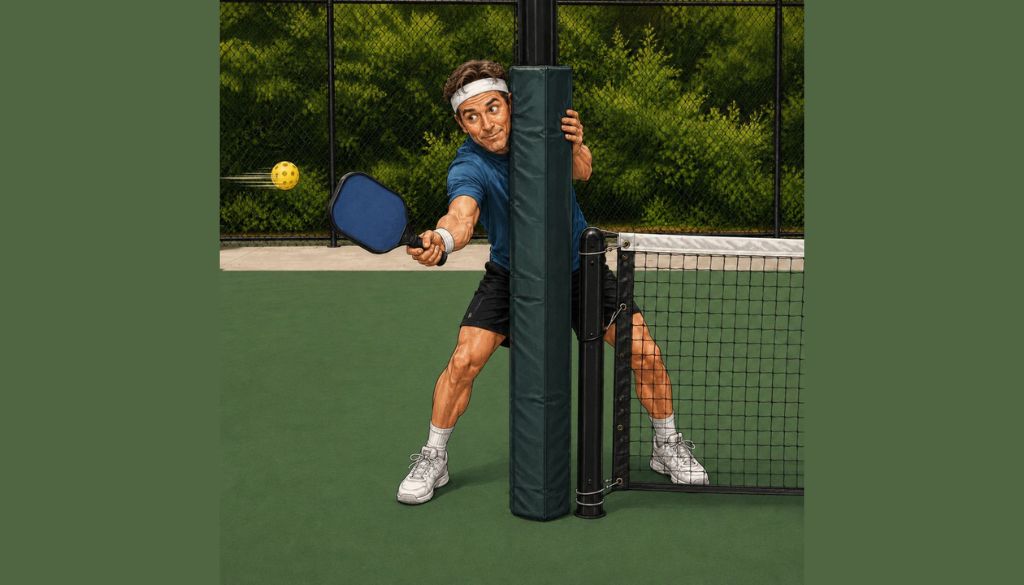
An ATP opportunity develops because your opponent has pulled you far enough off the court that the ball can travel around the outside of the net post instead of over the net. The opportunity is created by the angle and the path of the ball—not simply by how far you’re standing from the court.
Unfortunately, many players try anyway.
They reach for balls that should have been dinked back crosscourt. They rush the shot before the angle has fully developed. Or they attempt an ATP simply because they’re wide enough to think one should be available.
The best ATP players are surprisingly patient.
They are willing to hit several ordinary dinks while waiting for one extraordinary opportunity.
That’s exactly what this drill teaches.
Setting Up the Drill
Two players begin a cooperative crosscourt dink rally.
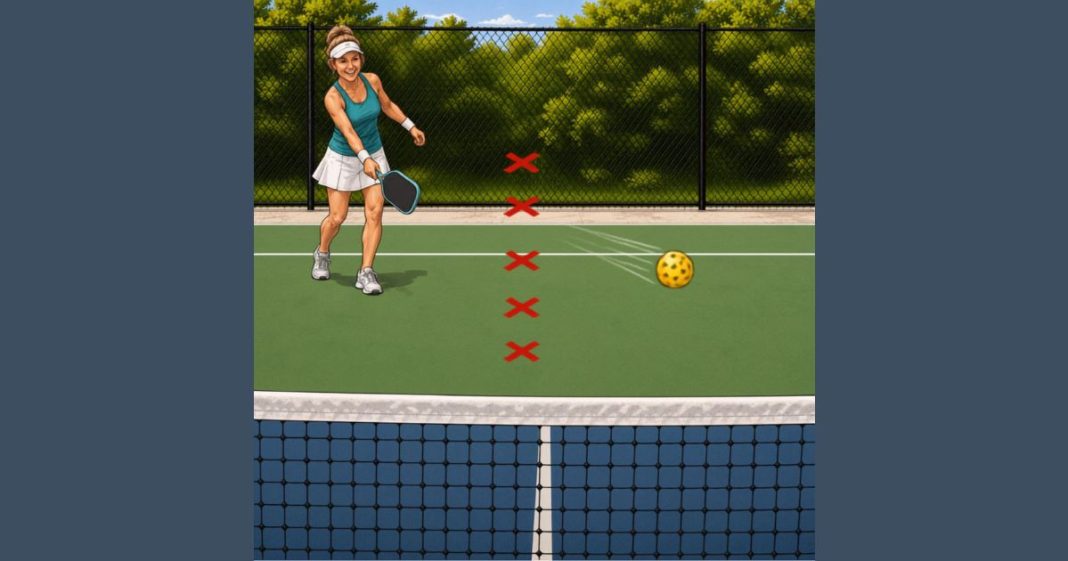
The feeder’s job is to gradually increase the angle of each dink. The first few balls should be comfortable and well inside the sideline. As the rally continues, the feeder slowly pulls the hitter farther off the court.
The hitter’s job is just as important.
Do not attempt an ATP until the angle has clearly developed and the ball can naturally travel around the outside of the post.
If the opportunity isn’t there, continue the crosscourt dink rally.
When the opportunity clearly appears, attempt the ATP. Whether you make it or miss it, reset the drill and begin again.
The goal is not to hit as many ATPs as possible.
The goal is to recognize the difference between a legitimate ATP opportunity and a ball that should simply be dinked back.
What to Focus On
The biggest lesson in this drill is patience.
Many ATP attempts fail because the player becomes excited the moment they’re pulled wide. Instead of evaluating the ball, they decide ahead of time that they’re going to try the shot.
Good ATP players do the opposite.
They evaluate three things before making the decision:
- Has the ball developed enough angle to travel around the outside of the post?
- Can I reach the ball without losing balance?
- Can I keep the shot low while still clearing the outside of the post?
If the answer to any of those questions is no, the correct shot is almost always another crosscourt dink.
Pay attention to your footwork as well. Move quickly to the ball, but slow down before contact. Players who hit ATPs while still running full speed usually lose both accuracy and control.
When the opportunity is there, the down-the-line target is often the most natural and highest-percentage finish because the angle has already opened that part of the court.
The Hidden Lesson
Most players think this drill is about learning to hit an ATP.
It’s really about learning to create one.
As you repeat the drill, you’ll begin to notice that successful ATPs rarely appear out of nowhere. They are usually created by several well-placed crosscourt dinks that gradually move both players farther off the court.
You’ll also notice that opponents often start shading toward the sideline once they know you’re looking for an ATP.
That’s valuable information.
Instead of forcing the shot, you may discover that the better play is a simple crosscourt dink that catches them leaning or opens space elsewhere on the court.
In other words, the threat of the ATP can become just as valuable as the ATP itself.
Common Mistakes
The most common mistake is attempting the shot too early. Just because you’ve been pulled wide doesn’t mean the ATP is available. The angle still has to develop.
Another mistake is forgetting that balance matters more than speed. Players often sprint to the ball but never slow down enough to make clean contact.
Many players also focus entirely on the highlight shot and ignore the setup. An ATP is almost always earned through several quality dinks, not one miraculous swing.
Finally, don’t become discouraged if you miss early attempts. Even advanced players hit relatively few ATPs during a normal match. The goal of this drill is to improve recognition and execution, not to manufacture ATPs where they don’t exist.
Beginner Variation
Start with exaggerated feeds.
The feeder intentionally creates obvious angles that clearly allow the ball to travel around the outside of the post. This allows the hitter to learn the mechanics of the shot without worrying about recognizing marginal opportunities.
Focus on clean contact and understanding the path of the ball around the post.
Intermediate Variation
The feeder mixes obvious ATP opportunities with balls that almost create the angle but don’t quite get there.
The hitter must decide whether to attempt the ATP or continue dinking.
This version teaches shot selection just as much as shot execution.
Advanced Variation
Play a live crosscourt dink rally.
Neither player knows exactly when the ATP opportunity will appear.
The point continues until someone successfully executes an ATP, misses an ATP attempt, or wins the rally another way.
Because the rally is live, players quickly learn that forcing the shot is often more costly than waiting for the next opportunity.
Drill Session
Begin with five minutes of cooperative crosscourt dinking to establish rhythm.
Next, spend ten minutes with the feeder gradually widening the angle until ATP opportunities naturally develop.
Then switch roles.
Finish with ten minutes of live crosscourt rallies where ATPs are encouraged but never forced.
Final Thought
The around-the-post shot is one of pickleball’s most exciting plays.
But the players who hit it most consistently aren’t the ones looking for it on every wide ball.
They’re the ones who understand when the opportunity has truly developed.
The Around-the-Post Builder teaches patience before aggression, recognition before execution, and decision-making before highlights.
Ironically, the less you force the ATP, the more often you’ll find yourself hitting one.