

Climb levels by owning your margin over the net.
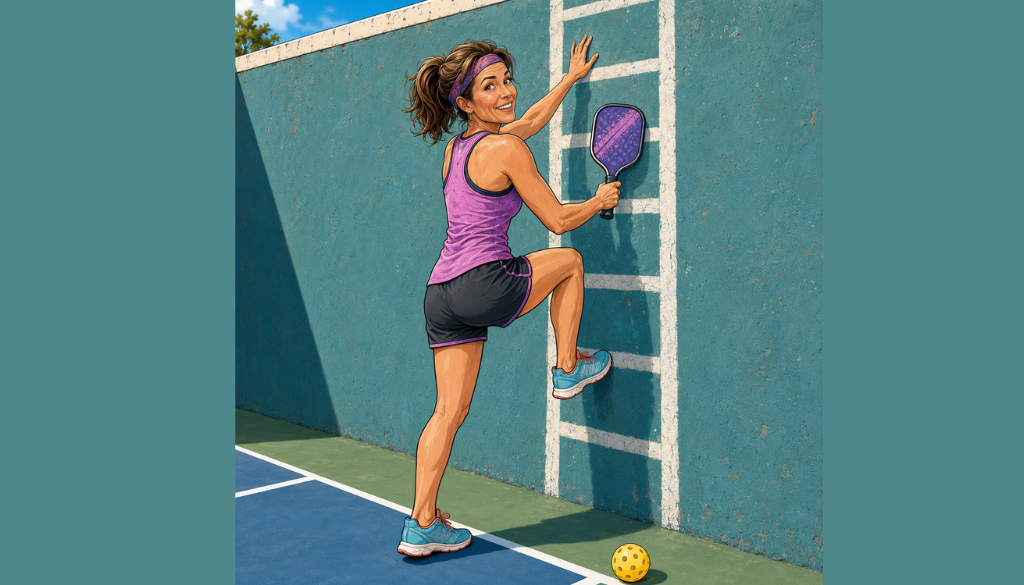
Most players only think about where the ball lands. This drill trains how high it travels over the net. You use a wall, taped “rungs,” and a few simple rules to build automatic, consistent margin—without floating balls or clipping the tape.
Why this drill matters
On the court, misses are usually too low (into the net) or too high (attackable floaters). The fix isn’t magic touch; it’s repeatable height control.
This drill turns height into a game: you have to keep every shot inside a specific “window” on the wall, then climb to tighter windows as you improve.
How to set it up
- Find a flat wall and mark a “net line” at 34–36 inches (real net height).
- Above that line, add two or three more lines with tape or chalk, for example:
- Level 1: 6–12 inches above net line
- Level 2: 4–8 inches above net line
- Level 3: 2–6 inches above net line
Stand 10–14 feet from the wall—about kitchen‑line or short midcourt distance.
Pick one shot type per round (e.g., soft dinks/blocks or gentle rolls) so you’re not mixing too many variables.
The core rules
- Every ball must cross the net line and hit the wall between the two lines of your current level.
- If you hit:
- Below the net line → net error.
- Above your top line → float/attackable error.
- You “clear” a level after a set number of clean hits in a row (start with 10).
Once you clear Level 1, move to the narrower window at Level 2, then Level 3.
What to focus on
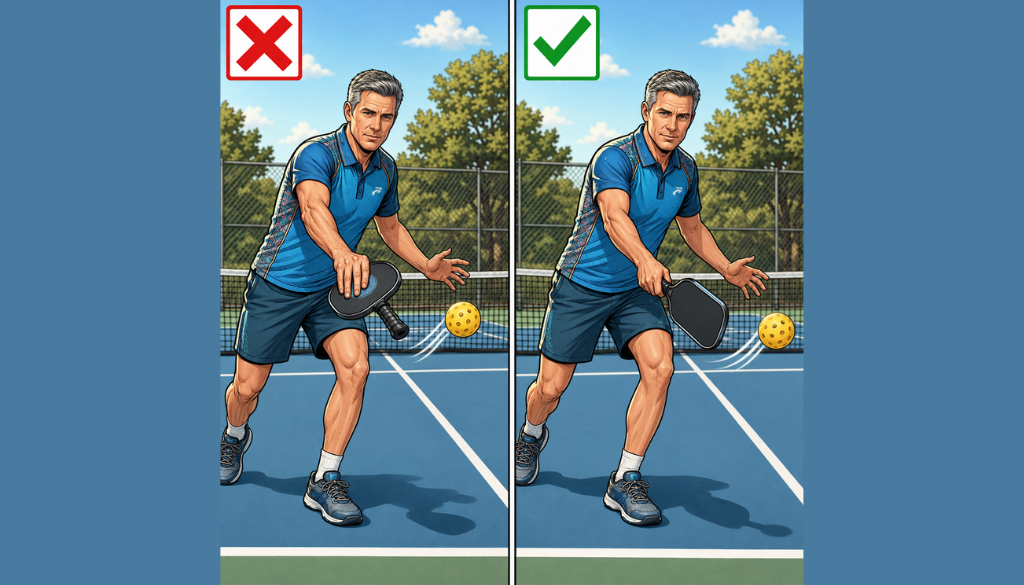
- Paddle face, not power. A tiny change in angle changes height dramatically. Keep the swing small and adjust the face, not the force.
- Same swing, different windows. Try to keep your motion nearly identical while slightly tweaking height—this is what carries over to drops, resets, and dinks.
- Where the ball is when you contact. Hit it just in front of your body, not beside or behind you, so you can see the window you’re aiming for.
Think: “Pick a window, swing through it.”
Simple variations
Width ladder
- After you’re comfortable with height, add two vertical lines to create a narrow “corridor.”
- Now every ball must land inside the height window and corridor, simulating precise dinks or drops.
Tempo ladder
- Alternate soft and firmer hits while staying in the same height window.
- This forces you to separate “how hard you swing” from “how high the ball travels,” which pays off big on resets and counter‑attacks.
Move‑and‑hit ladder
- After each shot, shuffle one or two steps left or right, then set your feet and hit the next ball into the same window.
- Mimics real rallies where you’re controlling height while moving.
Level variations
Beginner
- Start with a big window (e.g., 6–14 inches above the net line).
- Goal: 10 clean hits in a row before shrinking the window.
- Focus: clean contact, no shanks, and consistent net clearance—don’t worry about speed.
Intermediate
- Use the 6–12 inch and 4–8 inch windows.
- Add width or light movement after you can hit 15–20 in a row at Level 1.
- Focus: same relaxed swing, deliberate paddle angle changes, and staying balanced between reps.
Advanced
- Work mainly in the tightest window (2–6 inches above the net line) with movement.
- Mix shot types:
- 5 soft blocks at that height, then
- 5 gentle rolls at the same height window.
- Track streaks: how many total reps can you keep in the window before you hit the “net” or “floater” zones?
By the time you can live in a narrow window on the wall, your third shots, resets, and dinks on court will naturally carry built‑in margin—without ever feeling like you’re babying the ball.