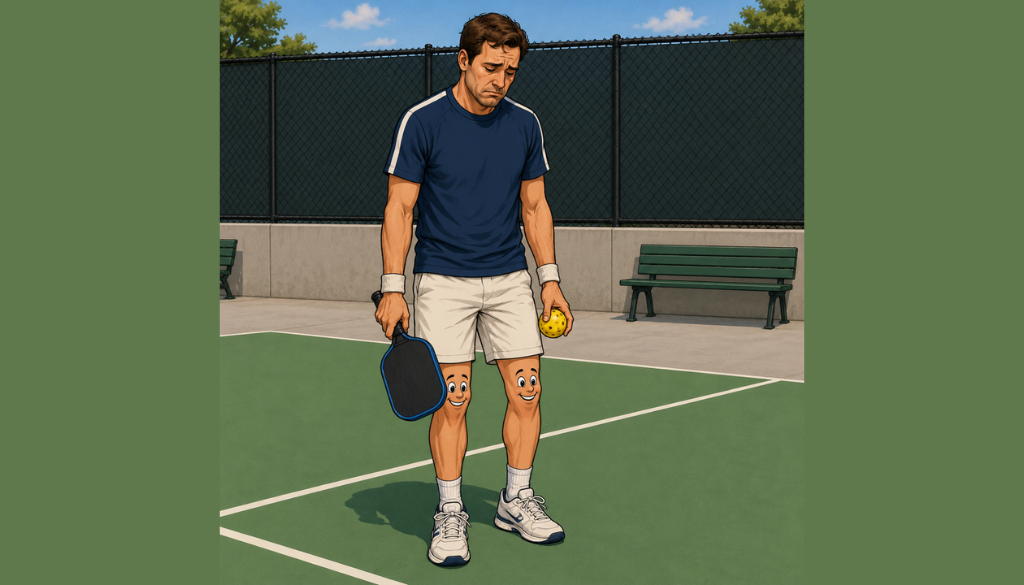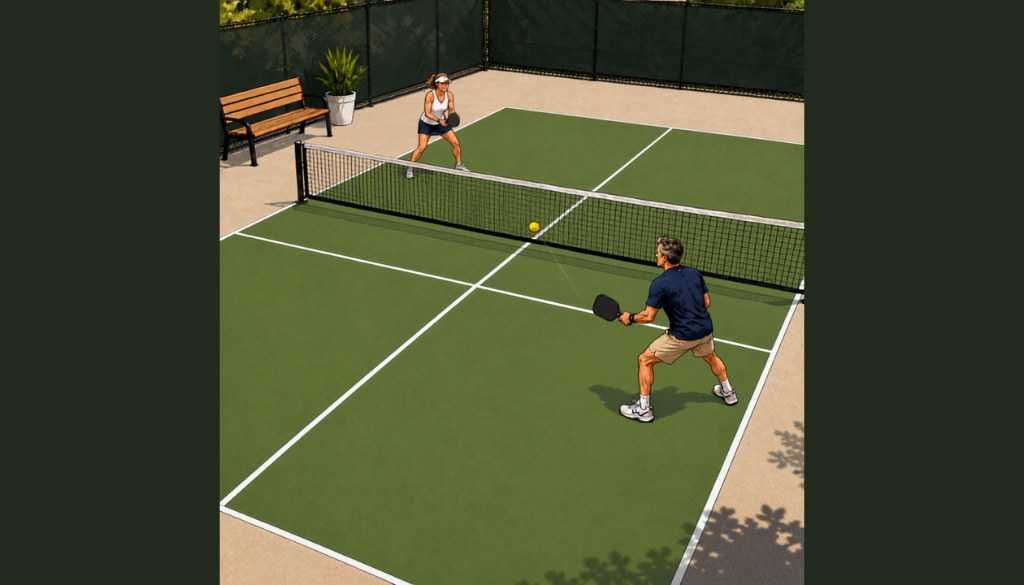


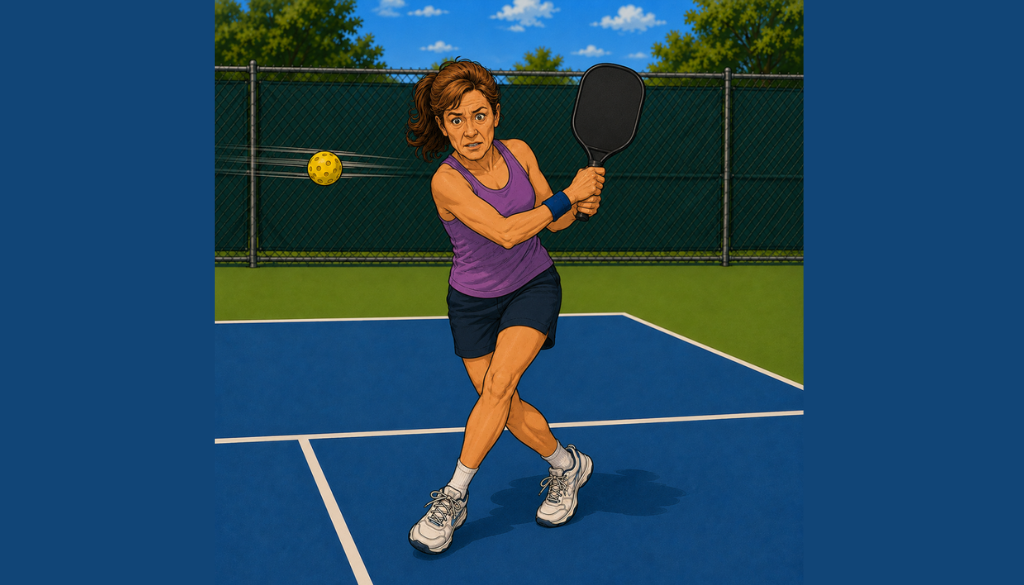
You’ve probably said it before.
“My backhand is terrible.”
Maybe it happened after dumping a return into the net. Maybe it was a missed dink. Maybe someone kept finding your backhand side all game and it felt like every ball hit there came back weaker than your forehand.
The natural assumption is that the swing is the problem.
So players start tinkering with mechanics. They change grips. They think about paddle angles. They watch videos looking for the perfect backhand technique.
Sometimes those things help.
But a surprising number of backhand problems have more to do with setup than the swing itself.
The real issue often shows up one second earlier.
You’re standing in the wrong place.
The Backhand Tells on Your Footwork
One reason players blame their backhand so often is that the shot tends to expose mistakes that the forehand can sometimes hide.
A forehand is naturally stronger and more forgiving for most players. You can get away with reaching a little. You can be slightly late. You can hit from less-than-perfect balance and still produce a decent shot.
The backhand is less forgiving.
When your spacing is poor, the backhand notices immediately.
The ball crowds your body.
The contact point drifts too close to your hip.
You end up reaching instead of moving.
The swing feels rushed.
The result is a weak shot, a mishit, or a ball dumped into the net.
Afterward, it’s easy to blame the backhand.
But the backhand was simply reporting the problem.
The real issue was positioning.
Strong Backhands Start Before the Swing
Watch players with reliable backhands and you’ll notice something interesting.
They rarely look like they’re working hard.
The shot appears smooth. Simple. Repeatable.
It’s tempting to assume they have better mechanics.
Often, they just arrive earlier.
Instead of reacting at the last second, they’ve already moved their feet, prepared the paddle, and created space before the ball gets there.
That space matters.
When the ball is contacted out in front of the body, the paddle can move naturally through the shot. The player stays balanced. Direction becomes easier to control. Consistency improves.
When the ball gets too close to the body, everything becomes more difficult.
Now the player is making adjustments during the swing instead of before it.
That’s when the backhand starts feeling unreliable.
Many players spend years trying to fix the swing when the real improvement would come from getting their feet organized earlier.
The Hidden Problem: Staying Too Square
One of the most common positioning mistakes is staying square to the net for too long.
The ball starts heading toward the backhand side, but instead of adjusting with the feet, the player waits and reaches.
At first, the difference seems small.
But every inch matters.
A ball contacted six inches farther out front feels completely different from a ball contacted beside your body.
One gives you options.
The other forces you to improvise.
The stronger player typically makes a small adjustment step early. Their body turns slightly. Their paddle prepares early. The spacing improves. The contact point stays consistent.
To an observer, it looks like they have a better backhand.
In reality, they often just have better preparation.
Why Your Best Backhands Feel Easy
Think about the best backhands you’ve hit recently.
They probably didn’t feel forced.
You weren’t lunging.
You weren’t reaching.
You weren’t trying to rescue the shot at the last moment.
Most likely, you arrived in balance and let the ball come into a comfortable contact zone.
That’s not a coincidence.
Balance is one of the biggest predictors of shot quality in pickleball.
Players often chase better mechanics when what they really need is more balance at contact.
Good balance doesn’t guarantee a great shot.
But poor balance almost guarantees inconsistency.
That’s why stronger players spend so much energy moving before the ball arrives.
The movement creates the balance.
The balance creates the consistency.
The consistency gets credited to the backhand.
A Simple Way to Diagnose the Real Problem
The next time your backhand struggles during a game, don’t immediately evaluate the result.
Evaluate your position.
Ask yourself:
- Was I balanced when I made contact?
- Did I have enough space between my body and the ball?
- Was the ball out in front of me?
- Did my feet move early enough?
- Did I prepare the paddle early enough?
Those questions often reveal more than the shot itself.
Many players discover that the backhand they thought was broken works surprisingly well when they’re properly positioned.
The shot hasn’t changed.
The setup has.
Drill: Fix the Setup, Not the Swing
This drill trains positioning and spacing rather than backhand mechanics.
Start with one player feeding balls to the backhand side from the kitchen or midcourt.
The hitter’s goal is not to hit winners. The goal is to arrive in balance before every contact.
After each shot, hold your finish for two seconds.
If you can’t comfortably freeze at the end of the swing, there’s a good chance your positioning wasn’t ideal.
As the drill progresses, the feeder should vary the location slightly. Some balls should be wider. Some should be deeper. Some should be closer to the body.
The hitter’s job is to solve the problem with footwork, not with reaching.
After a few minutes, most players notice something interesting.
The quality of the backhand improves without changing the swing at all.
That’s usually a sign you’ve found the real issue.
Final Thoughts
It’s easy to blame a shot.
It’s harder to blame your positioning.
The shot is what everyone sees. The footwork happens earlier and is often forgotten by the time the ball leaves the paddle.
But many backhand problems aren’t really backhand problems.
They’re spacing problems.
They’re preparation problems.
They’re footwork problems.
The next time your backhand feels unreliable, resist the urge to immediately change the swing.
Instead, ask a different question:
Did I give my backhand a chance?
Because a surprising number of “bad backhands” are simply good backhands being asked to work from bad positions.