

Most drive problems are not about strength, spin, or paddle choice. They come from timing, spacing, and intent. Players often think they miss drives because they are not hitting hard enough, when in reality they are hitting from poor positions, at the wrong moment, or with the wrong goal in mind. A clean, effective drive is built on balance, patience, and purpose, not force.
Here are the hidden mistakes that quietly sabotage most drive shots.
Driving From a Bad Base
One of the most common drive errors happens before the swing even starts. Players try to drive while moving forward, leaning backward, or standing tall with their weight floating. From an unstable base, the paddle face becomes inconsistent and control disappears.
A good drive starts from a balanced position. Knees are bent, feet are settled, and weight is slightly forward. Think of it as a mini split-step before you swing: your feet settle for a brief moment, your balance is centered, and then you drive. If your feet are still scrambling as you swing, the drive will almost always float or spray.
This mistake shows up most often in the transition zone, where rushed drives sit up for easy counters.
Contacting the Ball Too Early or Too Late
Many players rush the drive as soon as the ball is within reach. Others wait too long and let the ball crowd their body. Both lead to loss of control.
The ideal contact point for a drive is comfortably in front of your body, roughly a paddle-length away from your hip. When you swing too early, the ball still has pace and lift, causing it to sail long or rise. When you swing too late, you jam yourself and flip the paddle upward, creating pop-ups.
Waiting an extra fraction of a second often improves drive quality, but only until the ball reaches your comfortable strike zone in front of you. If you feel crowded or jammed, you waited too long.
Treating the Drive as a Winner Instead of a Setup
This mistake shows up most clearly against better players. Drives are not meant to end points outright most of the time. Their real job is to create weak replies.
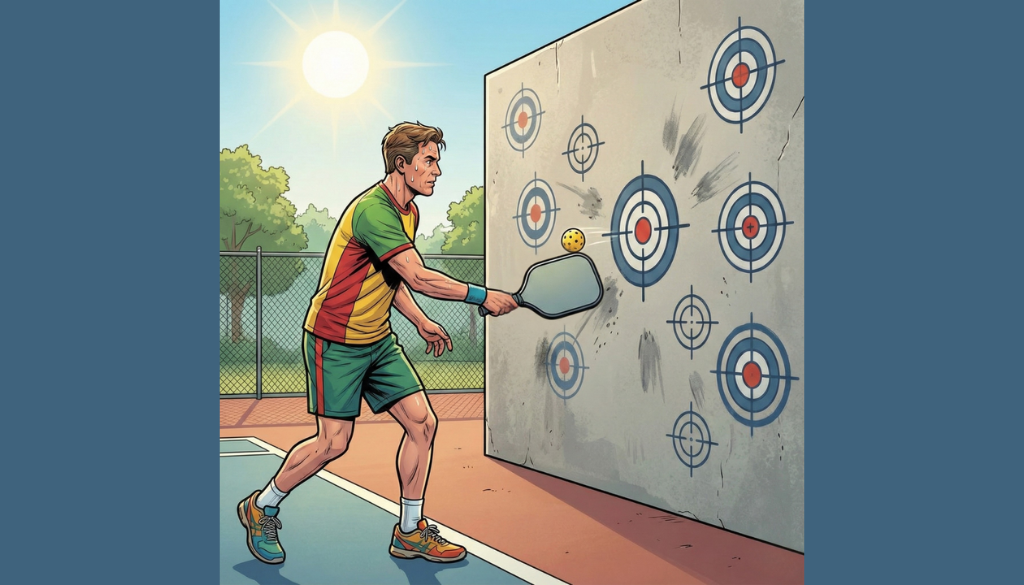
When players swing for winners, they overhit, aim too fine, or abandon margin. Smart drives are aimed at feet, hips, or the middle, forcing uncomfortable volleys or blocks that set up the next shot.
A successful drive often leads to a fifth-shot drop or a controlled put-away on the next ball. Thinking of the drive as a setup rather than a finisher immediately improves consistency and decision-making.
Ignoring Paddle Path and Height Control
Flat, laser-like drives look impressive but offer very little margin. They clip the net, sail long, or give opponents a clean counter.
Effective drives clear the net by a safe window, roughly a paddle height, and then dip into the court. This shape comes from a smooth paddle path and controlled lift, not muscling the swing. Slightly higher drives with shape are often harder to handle than flat rockets because they force opponents to volley up.
Most players get their best results at about 70 to 80 percent swing speed, where control stays high and pace is still disruptive.
Failing to Recover After the Drive
Even a good drive becomes a liability if you admire it. Many points are lost not because the drive was poor, but because the player failed to recover.
After contact, the job is not finished. You need to move forward, re-center your stance, and split-step as your opponent hits the next ball. Your paddle should return to a neutral position at chest height, ready for a block, counter, or drop.
Drive, then recover. Those two actions belong together.
Where Drives Actually Work Best
Drives are most effective from a balanced base at or just inside the baseline, especially when you have time to set your feet. They are also strong tools after a deep return or against heavy backspin, where using pace can be more reliable than trying to drop immediately.
Drives work best when the ball is high or slow, clearly in front of you, and when opponents are still moving or not fully set at the kitchen. When opponents are backing up, leaning, or late getting their paddles up, the pressure from a well-shaped drive multiplies.
When Not to Drive
Low, fast balls below net height, jammed balls close to the body, or shots hit while off-balance are poor drive candidates. These situations reward resets and controlled placement, not power.
Choosing not to drive is often the smarter play.
Drills to Clean Up Drive Mistakes
Balance and Contact Timing Drill
Stand at the baseline or in the transition zone. Have a partner feed moderate balls. Do not swing until your feet feel settled and balanced. Focus on contacting the ball comfortably in front of your body, then finishing under control.
Drive-as-Setup Target Drill
Drive crosscourt or at the middle with the goal of forcing a block, not a winner. Count points only when the next ball is a block, pop-up, or defensive reply you could comfortably attack or drop from.
Drive and Recover Drill
Hit a drive, then immediately move forward and split-step as your partner blocks the ball back. Start at 50 to 60 percent pace and increase speed only as long as your recovery stays disciplined and your next touch remains controlled.
A better drive is not harder. It is calmer, better timed, and followed by readiness. When you fix the hidden mistakes, the drive becomes a reliable tool instead of a gamble.