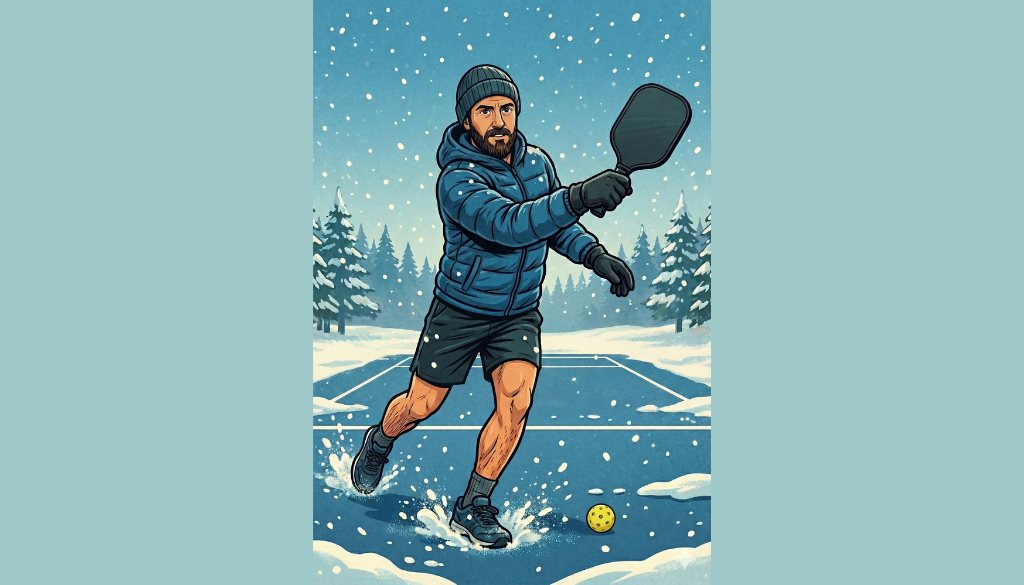


If there is one part of the court that makes players panic, it is the space between the baseline and the kitchen. Miss one ball there and the rally unravels. Freeze there for a moment and the opponents take over instantly.
The transition zone is not a danger zone. It is a workspace. Your job is to move through it in control so you can reach the kitchen on your terms. Once you understand what to do between the lines, the middle of the court stops feeling chaotic and starts feeling manageable.
What the Transition Zone Actually Is
The transition zone is the open court between the baseline and the kitchen line. You move through it after your return, during your third and fifth shots, and while recovering from pressure. Players struggle here not because the space is inherently unsafe, but because they enter it without a plan.
Your approach is simple. Move in stages. Hit a neutral ball. Then move again.
If you are returning serve, consider starting a few feet behind the baseline so you can step into the return and still send it deep. That extra margin gives you better depth and cleaner footwork during the first steps into transition.
The Three Big Transition Mistakes
Rushing to the kitchen on a bad ball
Many players sprint forward immediately after contact. If your drop floats, your opponent can drive straight at your chest while you are mid-run. The fix: hit the ball, pause for a moment, then only advance if your ball is neutral.
Backpedaling or freezing after a mishit
A tight contact causes many players to freeze or backpedal, both of which create perfect targets. Backpedaling also increases risk of falls. Pivot and side-shuffle instead, especially on deeper balls.
Standing tall with a low paddle
Tall posture with a dropped paddle slows reaction time. Stay low in the legs with your paddle in front at chest height. This allows you to block drives, soften pace, and control hurried balls.
The Transition Blueprint
Positioning
Move in phases. Baseline to midcourt. Midcourt to just behind the kitchen. Hold your ground between each phase until you know your last ball cannot be attacked.
Use this step-and-hold pattern after your return as well. A deep, high return gives you time, but you still want that same controlled forward movement rather than a straight sprint.
In doubles, stay connected with your partner so you share the middle and protect the lanes together rather than drifting apart.
Patience
Players lose the transition because they want to reach the kitchen in one movement. Accept that it often takes several balls to close the space. If you feel rushed or off-balance, your job is simply to send back a soft, neutral ball.
Use a short mental cue like: drop then step. Or: reset then move. This helps prevent panicked footwork after a tight contact and reins in the impulse to lunge on the next ball.
Posture
Stay low through your legs, not your back. Use micro steps to get behind the ball instead of reaching with your arm. Track shots with your hips and shoulders so your body stays aligned when balls come wide or fast.
Add a mini split-step as the opponent makes contact. This puts your weight on the balls of your feet so you can move left, right, or forward instantly.
For high balls, pivot, side-shuffle, and use your off-hand to track the ball. Never backpedal. This keeps you balanced and greatly reduces injury risk.
What to Hit in the Transition Zone
Soft drops and resets
These are your default. A soft drop that lands near the kitchen line makes opponents hit upward and buys time for your next step forward. A reset stops the pace of a drive and turns the rally back to neutral.
Selective drives
Drives from midcourt often fail at recreational levels because timing and spacing are harder from this area. Keep the language honest: most players should drive only when the ball is clearly high, slow, and comfortably in front.
Against hard drives
Block first. Keep the paddle steady and absorb the pace. You want the ball to land short enough to force the opponent to lift the next shot.
Against soft drops
Step in early and take it higher in the bounce when you can. Meeting the ball before it sinks gives you better control and keeps pressure on your opponents.
Singles Versus Doubles
Doubles
Shared court coverage means you and your partner move together. Stay low, guard the middle, and advance as a unit.
Singles
Do not rush in behind weak shots. Use depth from the transition zone to defend passing lanes and reset rallies until you earn a clean approach. Passing drives, deep neutral balls, and early contact on drops matter more here of the court.
Drills to Own the Transition Zone
Transition Walk-In Drill
Feed a deep ball. Drop it. Step forward. Pause. Drop again. Step again. This trains staged advancement.
Drive and Reset Pressure Drill
Start midcourt. Your partner drives at your body and feet. You block and reset until you create a neutral ball suitable for advancing. This builds comfort under pace.
Two-Step Advance Drill
After each shot, take exactly two steps forward and stop. It teaches discipline and prevents early rushing.
Shadow Transition Footwork
Move through the entire zone without a ball. Practice split-stepping, pivoting, side-shuffling, and staying low.
Quick-Reference: Fixing Transition Problems
| Problem | Likely Cause | Fix |
| Getting burned by drives | Rushing forward or standing tall | Step-and-hold, stay low, paddle out front |
| Stuck in midcourt | Forcing drives from bad positions | Use drops and resets, advance in stages |
| Falling on lobs | Backpedaling straight back | Pivot and side-shuffle, track with off-hand |
| Pop-ups from midcourt | Swinging at pace | Block or soften instead of swinging |
Closing: Turn the Middle of the Court Into Your Highway
The transition zone is not a place to fear. It is a space to manage. When you learn to move in phases, stay patient, choose the right ball, and keep your posture strong, the middle of the court becomes a controlled pathway to the kitchen. The players who master this zone win rallies long before they reach the line.