

In today’s game, the hard drive has become one of the most disruptive weapons in recreational and competitive play alike. It’s fast, direct, and designed to force a weak block or pop-up that ends the point. As more players develop strong third shot drives, the ability to defend them has become essential — especially without giving up court position.
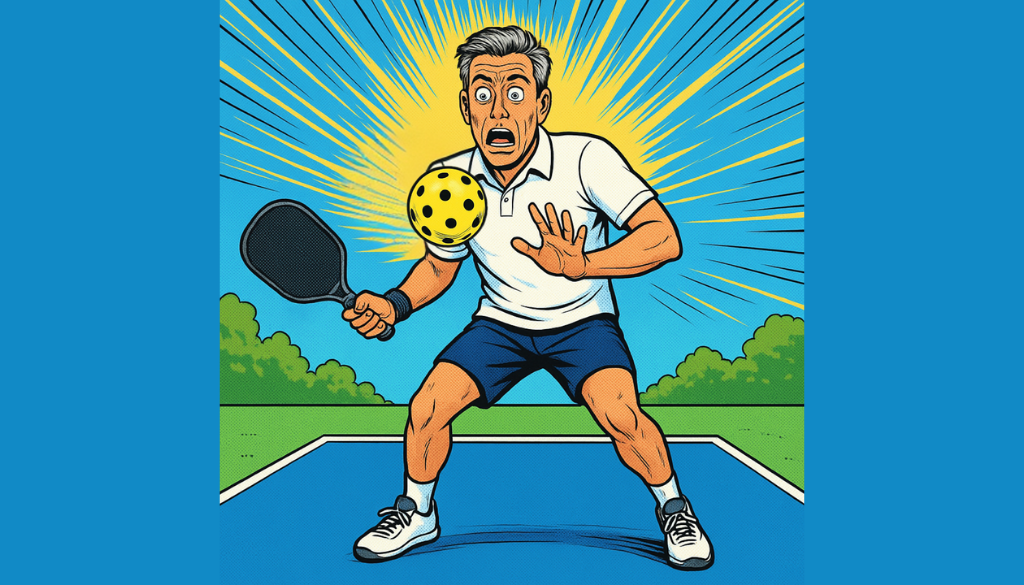
One variation that’s recently drawn attention is the “body blast” — a hard drive hit directly at your torso or paddle-side shoulder, designed to jam you and leave little room for a clean reply. It’s made waves at the pro level, with recent discussions around rule enforcement when players are hit. But in recreational play, the solution isn’t replay reviews — it’s learning to defend with stability, paddle discipline, and confidence.
This guide will show you how to handle hard drives from anywhere on the court, with special emphasis on neutralizing body blasts — without stepping back or flinching.
What Is a Hard Drive?
A hard drive is a fast, low shot hit from the baseline or transition zone — most commonly as the third or fifth shot in a rally. Its goal is to:
- Pressure the net player
- Force a weak volley or a pop-up
- Create offensive momentum early in the point
The shot is typically flat or slightly topspun, hugging the net and landing around your feet or body. When executed well, it challenges your reaction time, paddle control, and composure.
The body blast is a specific version of the drive, aimed right at your chest, armpit, or paddle-side shoulder. The idea is to jam your swing and limit your blocking options. It’s legal, strategic, and difficult to return cleanly unless you’re well-prepared.
Why Most Players Back Up — and Why That’s a Problem
Instinctively, many players retreat when they see a hard drive coming. It feels safer — gives you time to react. But backing up introduces new problems:
- You give up the kitchen line — the most strategic position in pickleball
- You allow your opponent to control the court
- You often retreat off-balance, leading to weaker returns
- You create separation from your partner, disrupting team coverage
The best defenders learn to hold the line, absorb the drive, and reset with control.
How to Defend a Hard Drive: Core Technique
1. Paddle Positioning
- Hold your paddle in front of your torso, around chest height.
- Keep the paddle face neutral to slightly closed — angled slightly down, not facing the sky.
- No backswing — you’re not swinging through the shot, you’re catching and guiding it back.
- Grip pressure: about a 4 out of 10. Soft enough to absorb, firm enough to control.
2. Body Positioning
- Stay low and balanced: knees bent, feet shoulder-width apart.
- Keep your weight forward over the balls of your feet.
- Don’t lean back or step away — stay grounded and centered.
3. Footwork
- Use small shuffle steps to stay centered.
- Don’t reach with your arm — move your body into position.
- Maintain your stance after the block — don’t lunge or twist.
How to Defend the Body Blast
The body blast is a unique challenge because it eliminates angles. It’s coming straight at your core or shoulder with speed, giving you little room to maneuver.
To defend it:
- Keep your paddle square to your chest — you’re not trying to redirect, just absorb and drop it short.
- Expect the contact to happen closer to your body than usual. Don’t try to create distance — just brace and block.
- If the ball comes toward your paddle-side shoulder, raise your paddle slightly and keep the face firm and steady.
- Stay calm — panic reactions often cause pop-ups or miss-hits.
It’s not about reflexes — it’s about position and mindset.
Mental Game: Stay Calm, Stay Ready
Defending drives — especially at your body — is more mental than physical.
- Expect it. The best players don’t look surprised by the drive. They know it’s coming, and they’re ready.
- Breathe between shots. It relaxes your grip and keeps your body from tensing up.
- Don’t flinch. A quiet paddle beats a flailing one every time.
- Treat it like a reset opportunity, not an emergency.
Calm defenders win more points — because they force attackers to take bigger risks.
When and Where to Reset the Ball
Your goal when defending a drive isn’t to counterattack — it’s to reset the point.
Best reset targets:
- Straight into the kitchen — neutralizes momentum and forces a soft reply.
- Middle of the court — creates hesitation between opponents.
- Short and low — make them bend and reach, buying yourself time.
Aim to land your block just over the net and deaden the pace — like catching an egg and setting it down.
Common Mistakes to Avoid
- Backing up: Gives away positioning and invites deeper attacks.
- Swinging at the drive: Often leads to errors or net balls.
- Overgripping: A tight paddle hand rebounds the ball too far.
- Reaching instead of moving: Extends your arm too far from your body, reducing control.
- Hitting too soon or too late: Let the ball come to your paddle — don’t attack it or catch it behind you.
Drills to Build Confidence Against Drives
Drill 1: The 3-Ball Block Progression
- Partner hits three hard drives from the baseline:
- 1 to your body
- 1 to your forehand
- 1 to your backhand
- You block each one into the kitchen, staying at the line.
- Focus: stability, paddle control, soft hands.
Drill 2: Body Blast Blocks
- Stand at the kitchen line while your partner drives balls directly at your torso from midcourt.
- Block every shot with paddle centered at your chest.
- No counter-hits — just resets.
Drill 3: Hold the Line Rally
- Live rally play with a twist — you’re not allowed to step back.
- Train your body to stay grounded and control returns under pressure.
Final Thoughts: Control Beats Power
The hard drive — whether a traditional third shot or a body blast — is designed to force errors, create panic, and take away your time.
But when you hold your ground, keep your paddle calm, and focus on control over counterattack, you take away its power. Drives only work when you let them.
Master the block. Reset with purpose. And let them be the ones to overhit next time.