

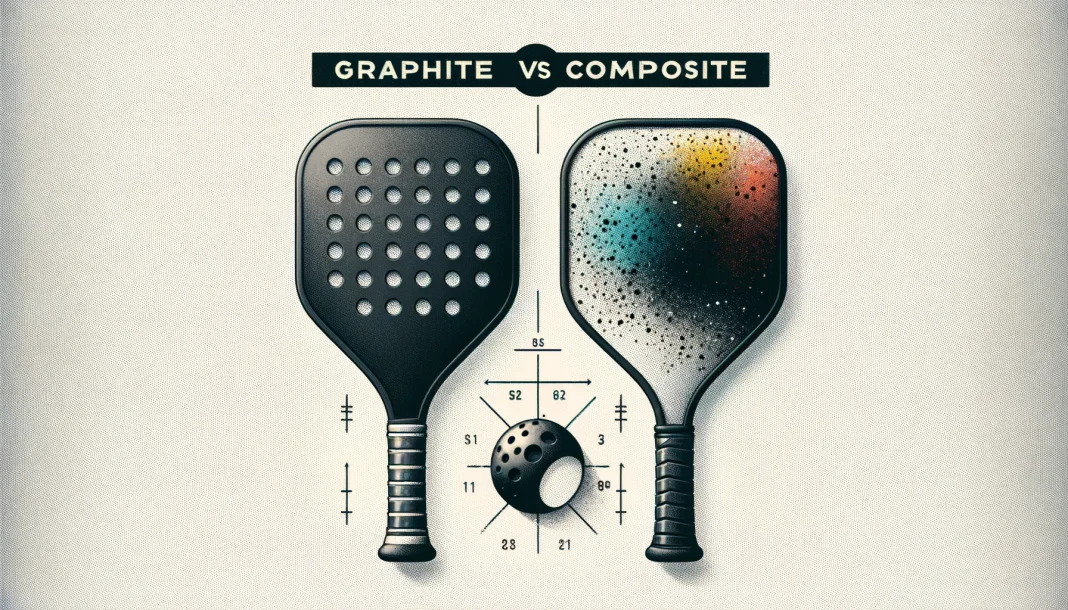
The realm of pickleball, a sport gaining traction among sports enthusiasts, presents a pertinent question that often leaves players intrigued – the choice between graphite and composite paddles. Boasting distinctive characteristics, both paddle types offer unique advantages that cater to different play styles and preferences. Graphite paddles, known for their lightweight nature and responsiveness, are often synonymous with agility and precision. Conversely, composite paddles, fabricated from a blend of materials, strike a balance in terms of power and control, proving to be a versatile tool on the court. This comparison aims to dissect the underlying aspects of these two paddle types, offering insights that could be instrumental in enhancing your pickleball performance. The choice may not be as straightforward as it seems, so why not explore further?
Understanding Graphite Pickleball Paddles
Delving into the realm of graphite pickleball paddles, it is crucial to note their defining features, inherent benefits, and suitability for different types of players based on their specific needs and skill levels. Graphite paddles are characterized by a graphite layer used in the top section of the core, which is lighter in weight compared to composite paddles. These paddles typically weigh around 7.5 ounces, making them suitable for players with arm issues and those seeking a control-oriented, rather than power-oriented, paddle.
Graphite paddles are renowned for their durability, owing to their strong make-up. They often outlast composite paddles, making them the preferred choice for many players. However, it should be understood that all paddles require replacement over time.
The defining characteristic of graphite paddles lies in their responsiveness. The graphite layer, encouraging wrist action, enhances the paddle’s responsiveness, making it easier to maneuver on the court. This is particularly beneficial for executing drop shots and dinks.
Graphite paddles are often more expensive than composite paddles. However, they offer a larger sweet spot, which can prove advantageous during gameplay. They may lack the power associated with heavier paddles, but their lightness and maneuverability compensate for this.
Exploring Composite Pickleball Paddles
Venturing into the characteristics of composite pickleball paddles, it’s essential to note their unique features, benefits, and suitability for various player types based on individual needs and skill levels. Composite paddles, crafted from a combination of materials, typically polyester and Nomex, boast a foam-like body that offers a silent, yet powerful hit. The open-celled honeycomb core, a hallmark of composite paddles, provides a balance of flexibility and rigidity, ideal for a wide range of playing styles.
Composite paddles are renowned for their textured surface, which plays a crucial role in providing spin. Advanced players often capitalize on this feature to increase their control over the ball, especially during drop shots and dinks. Additionally, compared to their graphite counterparts, composite paddles are generally less expensive, making them a cost-efficient choice for players at all levels.
The option of an edge guard is another attractive feature of composite paddles. A rubber band affixed to the paddle, the edge guard not only protects the playing surface but also increases the sweet spot, enhancing the player’s strike precision. For heavy-duty players, a durable edge guard can significantly prolong the paddle’s lifespan.
Comparing Graphite and Composite Paddles
Having explored the characteristics and benefits of composite pickleball paddles, it is now pertinent to juxtapose these attributes with those of graphite paddles to provide a comprehensive comparison of the two.
Graphite paddles are known for their lightweight yet sturdy design, making them a go-to choice for competitive and professional players. Their construction facilitates excellent energy transfer, ideal for dinks and driving the ball down the court, resulting in an overall more tactile feel on the paddle face.
Composite paddles, on the other hand, are revered for their balanced fusion of power and control. They are user-friendly, offering consistent performance on each swing, and have become increasingly popular among players of all skill levels. Their surface is slightly grittier, which lends itself to enhanced touch and shot accuracy.
When it comes to weight, graphite paddles are typically lighter due to the inherent properties of the material, a feature that could be an advantage for players seeking swift, responsive play. Composite paddles, though slightly heavier, are noted for their more pronounced power and control.
From a durability standpoint, both types fare well, but graphite paddles are often favored for their longevity. However, this comes at a higher cost, with graphite paddles generally being more expensive than their composite counterparts.
Benefits of Graphite Paddles
Examining the advantages of graphite paddles, one can appreciate their unique features that make them particularly attractive to seasoned and professional pickleball players. The benefits of graphite paddles are rooted in their construction, performance, longevity, and versatility, all of which contribute to a superior playing experience.
- Construction: Crafted from a carbon layer, graphite paddles are incredibly lightweight. This lightness enhances maneuverability, allowing players to swiftly respond to fast-paced play and make quick, precise shots.
- Performance: Graphite paddles, due to their rigid structure, offer excellent ball control and power. Their responsiveness enables players to execute accurate shots, while the energy transfer properties facilitate strong, decisive hits.
- Longevity: Graphite paddles are renowned for their durability. The robust carbon layer withstands repeated impacts, ensuring the paddle maintains its integrity over extended periods of use. This resilience makes graphite paddles a cost-effective choice for players who regularly engage in competitive play.
- Versatility: Graphite paddles are suitable for players of various skill levels. Their combination of lightness, robustness, and performance-enhancing properties cater to the needs of both novices seeking ease of use and professionals requiring high-performance gear.
Advantages of Composite Paddles
While graphite paddles offer numerous benefits, composite paddles too have their unique advantages that cater to a wide array of players. Composite paddles, constructed from a blend of materials, often including a core of Nomex, aluminum, or polymer, offer a balance of power and control that is appealing to many players.
The primary advantage of composite paddles is their versatility. They can be engineered to accentuate power, control, or a balance of both. This allows players to select a paddle that specifically complements their playing style. Furthermore, composite paddles generally have a larger sweet spot, providing a more forgiving striking area that can enhance performance for both beginners and advanced players.
Composite paddles also feature a slightly gritty surface, which aids in imparting spin on the ball, enhancing control and shot placement. This texture can provide a significant advantage in games where precision is crucial. Moreover, the flexibility offered by composite materials can create a trampoline effect, resulting in powerful shots without excessive effort.
Another advantage is durability. Composite paddles are robust and can withstand intense play over time, often outlasting their graphite counterparts. Although they tend to be heavier, many players find the additional weight beneficial, providing more stability and power.
In terms of cost, composite paddles typically offer a more affordable option, making them an attractive choice for those on a budget or beginners not ready to invest in a high-end graphite paddle.
Choosing the Right Paddle: Factors to Consider
Selecting the appropriate pickleball paddle necessitates careful consideration of several important factors, including the weight, durability, power, control, and price of the paddle, as well as the player’s skill level and playing style.
- Weight: The weight of a paddle significantly influences its performance. Lighter paddles offer more maneuverability and are suitable for players seeking control and finesse. In contrast, heavier paddles provide more power but require a stronger wrist and arm strength.
- Durability: The durability of a paddle is determined by its material composition. Graphite paddles are known for their strength and longevity, while composite paddles are typically more susceptible to wear and tear. Nevertheless, proper maintenance can extend the lifespan of both types of paddles.
- Power and Control: Power and control are interconnected attributes that depend on the paddle’s weight and design. Heavier paddles deliver more power, while lighter ones offer better control. Graphite paddles are generally known for their power and composite paddles for their control, but advancements in technology have blurred these distinctions.
- Price: The price of the paddle is an important factor, especially for beginners or casual players. While graphite paddles tend to be more expensive, they offer excellent performance and durability, making them a worthwhile investment for serious players. Composite paddles, on the other hand, are more affordable and offer good value for money.
Recommended Paddles for Different Skill Levels
The choice of pickleball paddle can significantly influence a player’s performance, and understanding the suitability of different paddles for various skill levels is essential for optimal gameplay. For beginners, the Gamma Mirage Poly Core Pickleball Paddle is a great entry-level option. This mid-weight paddle has a textured composite face, providing a good balance of control and power, which is ideal for those still honing their skills. It also features Sensa Poly Core technology which enhances touch, offering a more intuitive feel for the game.
For intermediate players, the Babolat RBEL Touch Pickleball Paddle is highly recommended. This lightweight graphite paddle has an enclosed polypropylene core, offering excellent precision and control. The shock-resistant bumper and strong edge guard provide durability, ensuring the paddle can withstand the increased intensity of gameplay at this level.
Advanced players often seek a balance of power and control to optimize their performance. The Head Gravity Lite Pickleball Paddle caters to this need with its lighter design, combining graphite and composite features. It boosts ball rebound energy for a massive sweet spot, giving advanced players the advantage in every shot.
Conclusion
In conclusion, both graphite and composite pickleball paddles offer unique benefits, catering to distinct playing styles and preferences. Graphite paddles are renowned for their lightweight design and responsiveness, while composite paddles provide a balance of power and control, with added spin capabilities. The choice between the two ultimately depends on the player’s specific needs and skill level. Therefore, understanding these differences is critical for players to select the paddle that best enhances their game performance.