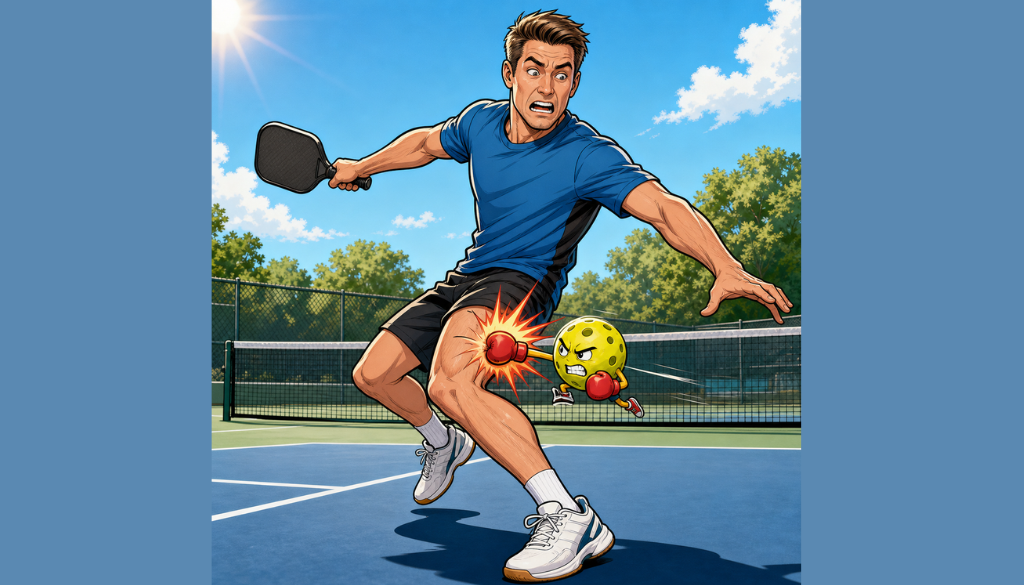



Few things in pickleball are more frustrating than missing the very ball that should have ended the point.
You’ve moved your opponents, earned a high ball, and created exactly the opening you wanted. Then somehow, the putaway clips the net or sails long.
Most missed putaways don’t happen because the shot was difficult.
They happen because players subtly change what was already working.
This isn’t about every attacking ball. It’s about the most common putaway situations — high volleys, overhead-like opportunities, and attackable balls near the kitchen line where you’re in control and should be finishing.
The good news: most putaway mistakes come from a handful of fixable habits.
Small adjustments can turn rushed misses into confident finishes.
1. Shorten the Swing Instead of Trying to Hit Harder
As soon as players recognize a putaway chance, they often speed everything up.
The backswing gets bigger. The grip tightens. The goal shifts from controlled placement to trying to end the point immediately.
That’s usually where control disappears.
The fix:
Keep your swing compact.
Think punch, not blast.
Your paddle should stay out in front with a short, repeatable motion. You still want pace, but controlled pace is far more reliable than overswinging.
One of the easiest ways to improve immediately:
Stay visually locked on the ball through contact.
Many players look up too early to see where the ball is going, and that small “peek” often pulls the shot off line.
Let the ball leave your paddle before your eyes leave the ball.
2. Choose Bigger Targets Instead of Perfect Winners
High balls tempt players into aiming for too much.
They go for:
• sharp sidelines
• extreme angles
• low-percentage winners
Under pressure, those targets shrink fast.
The fix:
Aim for larger, smarter finishing zones:
• the middle
• the body
• the feet
These targets create pressure while giving you far more margin for error.
The middle is especially effective because it creates hesitation between partners and often forces awkward contact.
You’re not trying to hit the flashiest winner.
You’re trying to hit the highest-percentage ball that ends the point.
3. Set Your Feet Before You Swing
Many putaway errors begin before contact even happens.
Players recognize the opportunity and rush the shot without fully establishing balance.
The fix:
Move → Set → Swing.
That extra adjustment step matters.
Even one small balance step can dramatically improve consistency because:
• your body stays centered
• your paddle path stays cleaner
• your upper body doesn’t have to compensate mid-swing
When your feet aren’t set, you’re often swinging while drifting, reaching, or falling backward.
The players who finish points best usually aren’t swinging harder.
They’re simply better balanced.
4. Keep the Ball Out in Front
Putaways become far less reliable when the ball crowds your body.
When contact gets too close:
• paddle control decreases
• angles shrink
• mishits increase
• balls often drift long or dump low
The fix:
Meet the ball in front of your body with space.
This gives you:
• cleaner paddle face control
• better direction
• more stability
Your body should support the shot — legs, torso, and balance — rather than relying only on the arm.
Think of your body as the foundation and your paddle as the finishing tool.
Earlier contact almost always leads to cleaner putaways.
5. Control the Path — Don’t Just “Hit Down”
“Hit down on it” is one of the most misunderstood pieces of putaway advice.
Players often hear that and respond by chopping steeply downward.
That creates:
• netted balls
• rushed mechanics
• inconsistent contact
The fix:
Think forward first, with controlled trajectory.
Yes, higher balls near the net may allow for a slight downward angle.
But many putaways — especially those farther back or slightly lower — are better finished with a flatter, forward path.
Your goal is not forcing the ball downward.
Your goal is controlling the ball so it stays aggressive without overhitting.
Stable paddle face + forward intent = more reliable putaways.
A Simple Drill to Build Better Putaways
If you want cleaner finishes, remove the pressure of “winning” while practicing.
Have a partner feed controlled, attackable balls near the kitchen line.
Focus on:
• compact swings
• balanced feet
• middle/body targets
• early contact
• controlled trajectory
Avoid full-power swings.
Train repeatable mechanics first.
The more your body learns controlled finishing patterns, the more naturally they’ll show up in matches.
Final Thoughts
Putaways should feel simple — but they often expose players’ biggest discipline breakdowns.
The difference between missing and finishing usually isn’t power.
It’s:
• swing size
• target choice
• footwork
• contact point
• trajectory control
Players who finish consistently aren’t doing something dramatic.
They’re simply staying disciplined in the moment that matters most.
Clean up these five small areas, and you’ll start converting more of the points you’ve already earned.