

Most players don’t think they’re slow at the net.
They think they just missed that one. Or the ball was hit harder. Or their opponent got lucky.
But being late to — and at — the kitchen line is rarely about speed. It’s about habits.
If you feel rushed in hand battles, late on counters, or constantly blocking instead of attacking, one of these patterns is usually the reason.
Habit #1: Admiring Your Shot
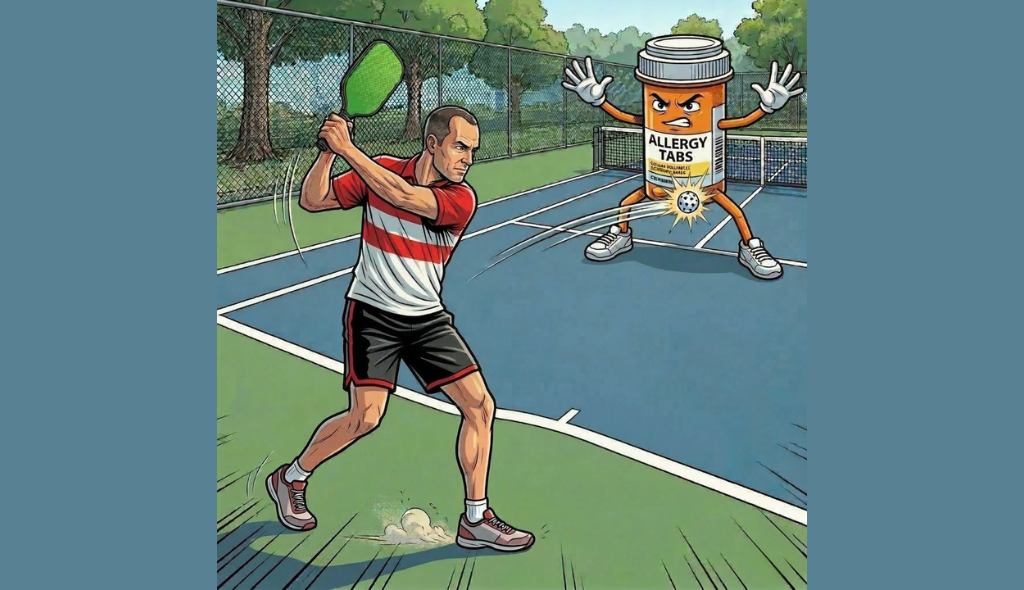
You hit a third. Or a drive. Or a drop.
And you watch it.
Even half a second of ball-watching after contact delays your movement forward. That delay compounds. You arrive a step late, slightly upright, slightly unbalanced.
The fix is simple: Hit. Move. Split.
Hit — then start moving forward immediately.
As your opponent begins their swing, give a small split-step so you land just as the ball leaves their paddle.
That timing keeps you balanced and ready instead of scrambling.
Habit #2: Drifting Instead of Stopping
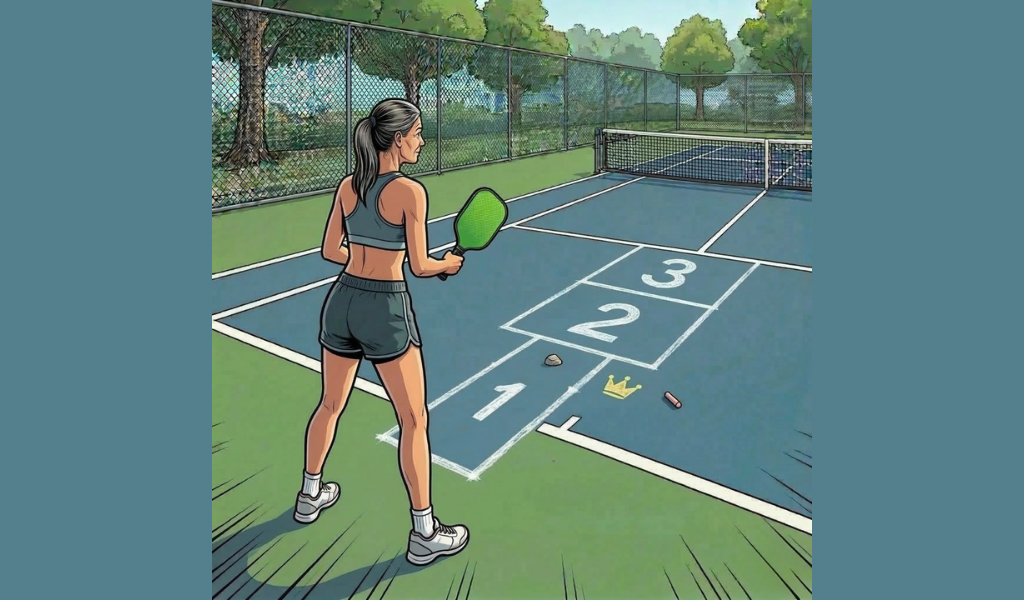
Some players don’t stop at the kitchen line. They drift into it.
They arrive tall, with momentum still carrying them forward. When the next ball comes fast, their weight is still moving.
Late hands are usually late feet.
You need a controlled stop, not a casual glide.
As you approach the line, take small adjustment steps and lower your center of gravity.
Aim to stop with your toes just behind the kitchen line.
A tiny brake step or split-step outside the NVZ keeps you from drifting in and keeps you balanced for volleys.
Arrive balanced, not floating.
Habit #3: Standing Too Tall
Upright posture feels relaxed. It also makes you late.
When you’re tall at the kitchen line:
• your paddle drops
• your reaction window shrinks
• your first move is downward before it’s lateral
A slightly flexed knee position, chest forward over your toes, and paddle up in front of your body changes everything.
You don’t need to crouch. You need to be loaded.
Think athletic stance, not spectator stance.
Habit #4: Waiting to See Where the Ball Goes
At higher speeds, you don’t react to the ball. You react to cues.
If you’re waiting until the ball has clearly crossed the net before you move, you’re already late.
Start reading earlier.
Watch shoulders. Watch paddle preparation. Watch body rotation.
If the paddle drops and loads, expect pace. If contact is high and in front, expect speed.
You’re not guessing. You’re narrowing likely options. And if you’re wrong, a neutral stance still lets you adjust.
Late is rarely about slow reflexes. It’s about delayed decisions.
How These Habits Compound
Watch a typical late exchange:
You admire your third.
You drift into the line.
You arrive tall.
You wait to see the ball.
Now you’re blocking a speed-up from your shoelaces.
Clean up the sequence and the entire rally changes.
Drill: On-Time Arrival Drill
Purpose
Train proper movement timing and balanced arrival at the kitchen line.
Setup
One player at the baseline. One player already at the kitchen line feeding controlled volleys.
Execution
The baseline player hits a controlled third shot and moves forward immediately on contact.
As they approach the line, they must:
• take small adjustment steps
• lower into athletic posture
• split-step just before the feeder makes contact
The feeder sends a firm but controlled volley to either side.
The moving player focuses on balanced blocks or counters, not swinging hard.
Work in 60–90 second rounds, then switch roles.
Goal
Complete 10 clean approach-and-block sequences in a row without drifting into the kitchen or arriving tall.
Progression
Increase feeder pace slightly and add directional disguise so the approaching player must read earlier.
Being on time at the kitchen line isn’t about having faster hands.
It’s about removing the small habits that make you late.
Fix those, and the game slows down.