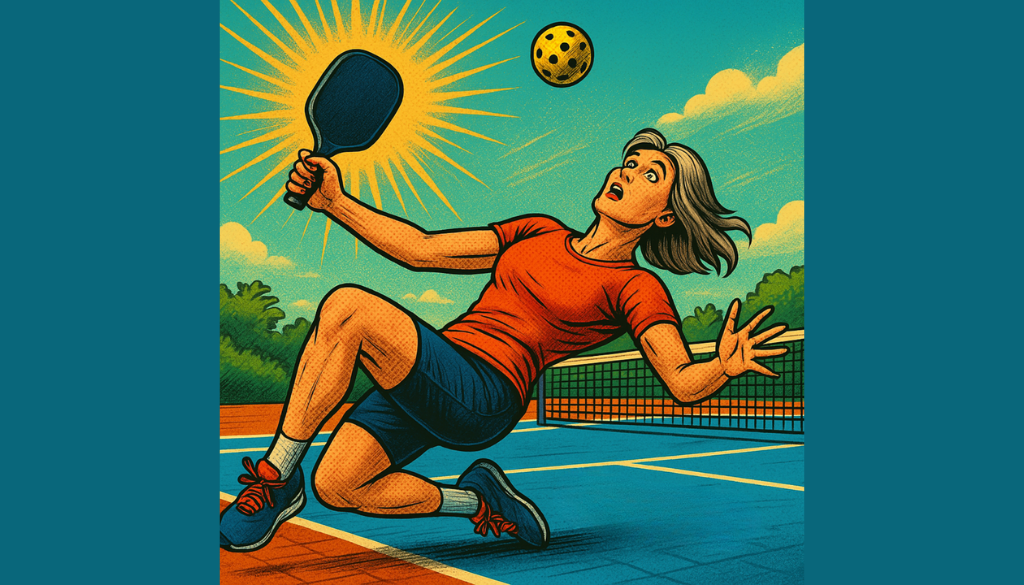


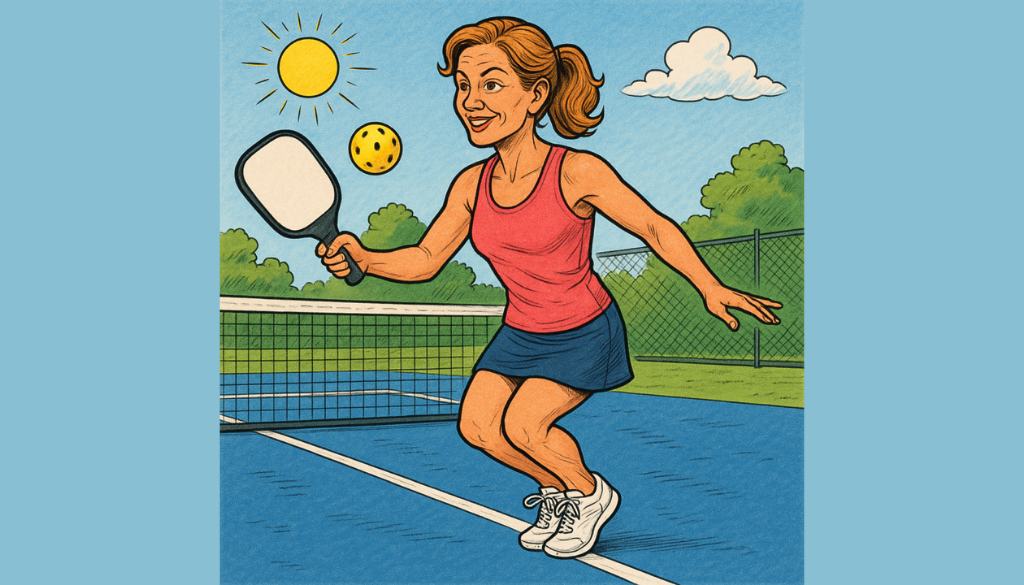
Mastering these subtle footwork patterns gives you the edge at the kitchen line.
Most players think fast hands win the net. But the truth is, your feet set up every successful exchange. Great players rely on small, efficient footwork that keeps them balanced, neutral, and ready to strike or reset at a moment’s notice.
These eight micro-movements—some subtle, some more active—are the hidden foundation of elite net play. You don’t need to be fast. You need to be efficient.
1. The Anchor Step (Mini Rebound Reset)
What it is:
A short heel-lift that resets your weight and paddle position between volleys.
Why it matters:
After a volley or block, many players either freeze or drift upright. The anchor step brings your weight back into an athletic stance and gets your paddle centered again.
How to do it:
- After contact, slightly lift both heels and replant them softly
- Stay low and engaged—don’t bounce upright
- Paddle should return to a ready (central) position immediately
- Helps prevent overcommitting after wide volleys
Common mistake: Rising tall or leaning backward after a reach.
2. The Pre-Pivot (Torso Loading Anticipation)
What it is:
A mini-rotation of your shoulders and hips to prepare for a backhand flick or forehand punch.
Why it matters:
This loading move shortens your swing and improves redirection. But it has to be controlled.
How to do it:
- Shift front shoulder slightly toward expected side
- Let hips and torso coil while feet stay grounded
- Stay balanced—don’t over-rotate or telegraph direction
- Useful for fast exchanges or when reading opponent’s paddle angle
Common mistake: Opening up too early and giving away your target.
3. The Split-Still Combo (Split + Pause)
What it is:
A small hop timed to your opponent’s contact, followed by a brief, grounded pause.
Why it matters:
It centers you for reaction but must be followed by calm readiness—not constant motion.
How to do it:
- Time your split so feet land as opponent hits the ball
- Land with knees bent, weight forward, paddle centered
- Pause briefly—you want readiness, not stiffness
- Keeps your paddle floating while your feet anchor
Common mistake: Floating after the split or freezing completely.
4. The Pressure Creep (Subtle Forward Gain)
What it is:
A short forward shuffle to gain net pressure after a soft ball—without crossing feet or entering the NVZ.
Why it matters:
Closes space, reduces opponent’s time, and makes Ernes or putaways easier—but only when timed correctly.
How to do it:
- After softening pace with a dink or block, take one small shuffle forward
- Do not lunge or step across feet
- Stay outside NVZ and avoid moving in when opponent is still in control
- Helps when you’ve reset or forced your opponent wide
Common mistake: Rushing in too early or stepping across the line.
5. The Lateral Shuffle
What it is:
A controlled side-to-side movement that maintains paddle-ready stance while tracking dinks or volleys.
Why it matters:
Keeps you square to the net and avoids overreaching or getting off balance.
How to do it:
- Stay low with knees bent
- Push off from the inside of one foot and glide the opposite foot out
- Do not cross your feet unless chasing a wide ball
- Head and paddle stay centered—let your body carry you left or right
Common mistake: Stepping across too early or drifting backward.
6. The Drop Step Pivot
What it is:
A backwards step with one foot, combined with a torso turn to create space and handle deep or angled dinks.
Why it matters:
Gives you room to breathe on tough wide shots without retreating fully out of position.
How to do it:
- If pulled wide, drop your outside foot diagonally behind you
- Let your upper body pivot to face the new angle
- Maintain paddle in front while preparing to reset
- Allows you to stay close to kitchen but not get jammed
Common mistake: Turning too far or drifting back instead of pivoting.
7. The Backhand Crossover Step
What it is:
Crossing your dominant foot in front of your non-dominant leg to reach a wide backhand volley.
Why it matters:
It’s a reach-extender, but only for specific moments. Too much use leads to imbalance.
How to do it:
- Use only when a shuffle won’t get you there
- Keep shoulders square and paddle extended
- Immediately recover to neutral stance after contact
- Don’t pair with lunge or lean—keep base low
Common mistake: Using crossover steps too often or without balance.
8. The Low Athletic Stance
What it is:
A constant foundation—not just a move. Staying low, weight forward, on the balls of your feet.
Why it matters:
It improves reaction time, paddle control, and reduces NVZ faults from leaning.
How to do it:
- Feet shoulder-width apart
- Knees flexed, back flat, head up
- Weight forward over balls of feet
- Paddle high and centered
Common mistake: Standing tall or resting on heels between shots.
Drills to Train These 8 Footwork Moves
1. Kitchen Shadow Sequences
- Without a ball, cycle through: split step → anchor step → pre-pivot → pressure creep
- Do 3 volleys, then reset position
2. Shuffle Cone Drill
- Place cones at 3–4 lateral positions at the kitchen line
- Shuffle side-to-side, touch cone, return center
- Focus on posture and foot glide
3. Drop Step & Recover
- Feed deep or wide dinks
- Player must drop step, reset with backhand block, and recover to middle
4. Crossover Reaction Drill
- Feed alternating wide balls
- When backhand crossover is needed, execute and immediately recover
- Emphasize minimal use—only when necessary
5. Wall Anchor Drill
- Hit 3 volleys against a wall
- Between each one, perform heel-lift anchor reset + split
- Stay low and compact
Final Thought
These eight mini-moves are the foundation of elite net play. They don’t just help you reach more balls—they help you stay calm, balanced, and dangerous in the storm of a hand battle.
Paddle speed helps. But quiet feet, smooth resets, and precise posture win more points in the long run.
Learn these. Train these. And the next time you’re toe-to-toe at the kitchen line, you won’t just survive the exchange. You’ll control it.