


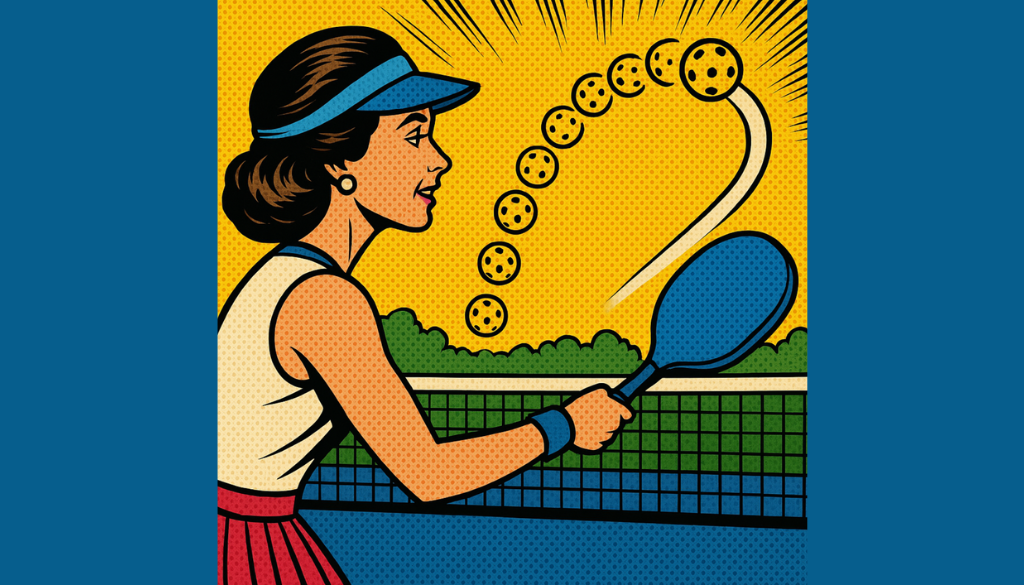
Mid-rally is where points are often decided in pickleball. After the serve, return, and initial exchanges, players settle into patterns that become predictable. The ability to disrupt these patterns with strategic adjustments forces opponents into errors. These techniques work by creating unexpected changes in pace, direction, or spin when opponents least expect them.
Why Most Players Miss Opportunities Mid-Rally
Most players fall into predictable patterns during extended rallies:
– Hitting to the same targets repeatedly
– Maintaining consistent pace throughout exchanges
– Telegraphing intentions with body positioning
– Focusing solely on keeping the ball in play rather than creating pressure
These habits make players readable and allow opponents to anticipate shots. The best players recognize that mid-rally adjustments create opportunities without increasing risk.
Core Techniques
1. The Pace Change Reset
The pace change reset involves deliberately slowing down a shot after a series of faster exchanges.
Execution:
– Maintain the same backswing as previous shots
– Reduce follow-through at the last moment
– Keep the paddle face slightly open
– Target the middle of the kitchen or opponent’s feet
This technique disrupts timing and often results in opponents hitting too early or lunging forward off-balance. The key is maintaining identical preparation to previous shots while changing only the follow-through and contact point.
The most effective moment to deploy this technique is after establishing a rhythm of 3-4 shots at consistent pace. The sudden change forces opponents to adjust their timing mid-swing, creating hesitation and weak returns.
2. The Directional Switch
The directional switch creates confusion by changing the cross-court pattern that naturally develops in rallies.
Execution:
– Establish a cross-court pattern for 2-3 shots
– Position body as if continuing the pattern
– At the last moment, redirect down the line
– Keep the shot low and controlled
This technique forces opponents to change direction quickly, often resulting in reaching errors or weak returns. The effectiveness comes from the natural tendency of players to anticipate continuation of established patterns.
The directional switch works best from mid-court positions where angles are available in both directions. The deception comes from body positioning that suggests one direction while the paddle delivers another.
3. The Height Variation
The height variation introduces a higher trajectory after a series of low exchanges.
Execution:
– Use during dinking exchanges
– Maintain the same paddle preparation
– Add slight underspin
– Target the back third of the kitchen
This technique disrupts opponents’ paddle positioning and often creates pop-ups or defensive returns that can be attacked. The key is maintaining the appearance of a standard dink while changing the ball’s trajectory.
Height variations are most effective when opponents are leaning forward in anticipation of another low dink. The unexpected higher ball forces a quick adjustment in paddle angle that frequently results in errors.
4. The Disguised Angle
The disguised angle creates sharp cross-court shots from neutral positions.
Execution:
– Square body toward the net as if hitting straight ahead
– Keep paddle face neutral until the last moment
– Use wrist action to create angle at contact
– Accelerate through the hit with controlled speed
This technique forces lateral movement and often results in opponents reaching with one hand rather than moving their feet. The deception comes from body alignment that suggests a straight shot while delivering an angle.
The disguised angle can be executed from any court position but is particularly effective when opponents are positioned to cover straight shots. The late angle change leaves minimal time for adjustment.
Applying These Techniques Effectively
Timing Considerations
- Implement after establishing a pattern (minimum 3-4 shots)
- Use when opponents appear comfortable or settled
- Apply when opponents’ weight is shifting away from the target area
- Avoid using the same technique twice in succession
The element of surprise is critical. These techniques lose effectiveness when overused or applied at predictable moments in the rally.
Court Position Factors
- The directional switch works best from mid-court positions
- The pace change reset is most effective from the kitchen line
- The height variation requires kitchen line positioning
- The disguised angle can be executed from any court position
Position influences the available options and the likelihood of success. Attempting techniques from inappropriate court positions increases error rate.
Mental Approach
Patience is essential when implementing these techniques. The goal is not to force winners but to create situations where opponents make errors. Maintaining a calm, observant mindset allows for recognition of the optimal moment to deploy each technique.
Successful implementation requires:
– Reading opponent tendencies
– Recognizing established patterns
– Identifying weight distribution and movement habits
– Maintaining composure during extended rallies
Common Mistakes to Avoid
- Overusing any single technique
- Attempting techniques while off-balance
- Making adjustments too early in rallies before patterns are established
- Sacrificing control for deception
- Telegraphing intentions with obvious body language
The most common error is attempting deception before establishing credible patterns. Patience and setup are as important as execution.
Drills to Master Mid-Rally Techniques
Drill 1: Pattern Disruption Sequence
Partners rally with a set pattern for 4 shots, then player A implements one of the four techniques.
Focus: timing the pattern break, maintaining control.
Drill 2: Reaction Testing
Partners dink 6-8 times, then one player calls out a technique number (1-4) that must be immediately executed.
Focus: quick technique selection and execution under pressure.
Drill 3: Technique Rotation
Live rally play where each player must cycle through all four techniques during a single point.
Focus: recognizing appropriate situations for each technique.
Final Thoughts: Subtlety Over Power
The most effective mid-rally adjustments are subtle. They don’t rely on power or athleticism but on timing, control, and tactical awareness. When executed properly, these techniques create the impression that opponents are making unforced errors, when in reality, they are responding to carefully crafted deception.
Mastering these four techniques transforms defensive positions into offensive opportunities and turns extended rallies into points won through strategic manipulation rather than physical dominance.


