


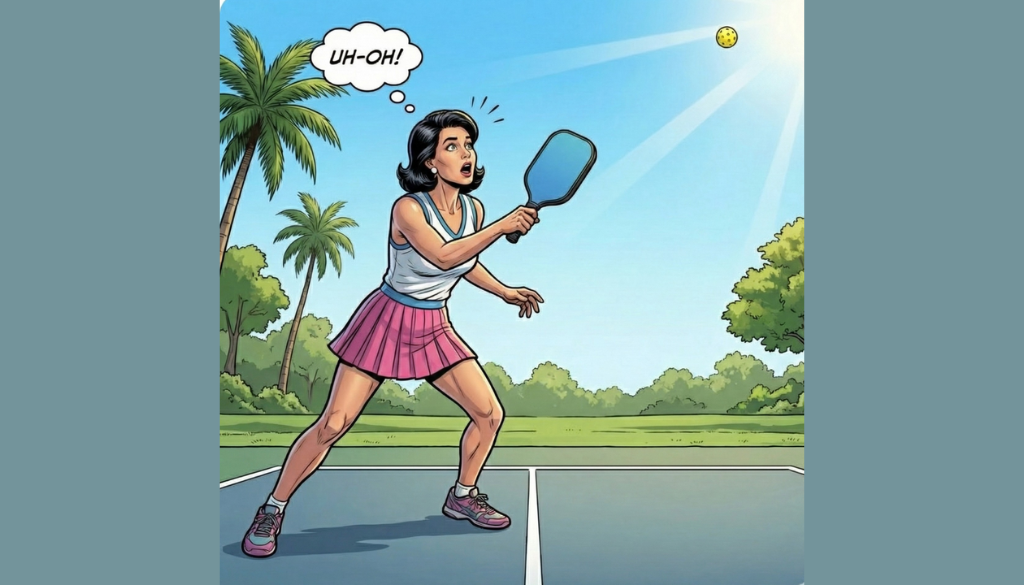
Pop-ups are one of the most frustrating mistakes in pickleball because they feel random. One rally everything feels smooth, the next ball floats up and gets crushed. Most players assume they opened the paddle face or swung incorrectly, so they start adjusting grip, wrist angle, or swing path.
Yes, paddle angle and grip matter. But if your feet are late, no amount of mid-swing correction will save you consistently.
Most pop-ups start with late feet, not bad hands.
Why Pop-Ups Rarely Come From the Swing
If you slow things down, most pop-ups happen before the paddle ever touches the ball. The body is still moving, leaning, or reaching when contact happens. When that occurs, the paddle naturally lifts the ball even if your stroke itself is sound.
A good swing hit from a bad position will still produce a bad result.
The real issue shows up earlier than most players think.
The Real Problem: Late Feet and Crowded Contact
Pop-ups happen when you arrive late to the ball and compensate with your upper body. This usually shows up as:
- Reaching instead of stepping
- Leaning backward or sideways
- Letting the ball crowd your torso
- Hitting while still drifting forward
When your feet are late, your paddle face opens automatically as a survival response. That response sends the ball upward instead of forward.
This is why pop-ups feel accidental. You did not choose to lift the ball. Your body made the choice for you.
Where Pop-Ups Happen Most Often
Pop-ups show up repeatedly in a few predictable situations.
In the transition zone, when players try to block or volley while still moving forward.
At the kitchen line, when dinks are taken while drifting or stretching wide.
Against pace, when players try to counter before their feet have settled.
During fast hands exchanges, when speed-ups jam the body and players flip the paddle upward instead of creating space.
Different situations, same root cause: unstable feet at contact.
Spacing: The Detail Nobody Talks About
Spacing is the distance between your body and the ball at contact. Too close is just as damaging as too far away.
A simple reference point helps. Aim for contact roughly a paddle-length in front of your hip, with your elbow comfortably away from your ribs. If the ball is on top of you or at full arm’s reach, spacing is already compromised.
Spacing errors show up frequently on backhands. Many players stand too close on backhand dinks and volleys, which crowds the swing and produces soft pop-ups.
Good spacing is created with your feet, not your arms.
Posture and Balance Matter More Than Power
Standing tall is one of the fastest ways to create pop-ups. Straight legs raise your contact point and force the paddle to lift the ball. Staying low through the knees keeps the paddle level and gives you margin without unwanted height.
Balance matters just as much. If your weight is falling backward, the ball floats. If you are lunging forward, the ball pops up. Stable feet lead to stable contact.
A light split-step as your opponent makes contact helps your feet settle and prepares your body to move without panic.
How to Fix Pop-Ups Before You Swing
The fix starts earlier than most players expect.
Move first, then swing.
Use small adjustment steps instead of lunging.
Let your feet settle before contact whenever possible.
If you feel rushed, your priority is not placement or spin. It is balance. A balanced neutral ball is far better than a rushed aggressive one.
Common Fixes That Miss the Point
Closing the paddle face mid-swing rarely works because the real problem already happened.
Swinging softer without changing footwork often leads to even higher floaters.
Over-focusing on grip or spin distracts from positioning.
Paddle adjustments should be fine-tuning after your feet and spacing are correct, not the primary solution.
Drills That Eliminate Pop-Ups at the Source
Spacing Check Drill
Have a partner feed moderate balls. Before swinging, take one adjustment step to create space. If you feel jammed, step back or sideways. If you feel stretched, step in. Do not swing until contact feels comfortable.
Pause-and-Hit Drill
Feed controlled balls to both forehand and backhand sides, including dinks. Focus on letting your feet settle briefly before swinging. This builds balance awareness that transfers directly to kitchen play.
Transition Block Reset Drill
Start in midcourt. Your partner drives at 50 to 60 percent pace. Focus on stopping your feet before blocking and sending a low reset. Increase speed only when your resets stay controlled and low.
When a Pop-Up Is Still the Right Choice
Sometimes height is the smart decision. When you are late, stretched, or off-balance, a higher neutral ball can buy time and reset the rally. For example, on a deep fast ball when you are moving backward, a higher defensive ball toward the middle may be safer than forcing a low shot and missing.
The mistake is not choosing height. The mistake is lifting the ball unintentionally.
Control the Feet, Control the Ball
Pop-ups fade when your feet arrive on time. Once your body is balanced and spaced correctly, your paddle no longer has to rescue the shot. The ball stays lower, your targets improve, and rallies feel calmer.
Fix the feet first. The swing will follow.


