

Pickleball is a game of finesse, strategy, and power. While aggressive shots like drives and slams often steal the spotlight, a well-executed block can be equally effective, especially when facing players who rely on power and pace. This article delves into the nuances of blocking, exploring its mechanics, variations, strategic applications, and how to master this often-overlooked “offensive” weapon.
What is Blocking?
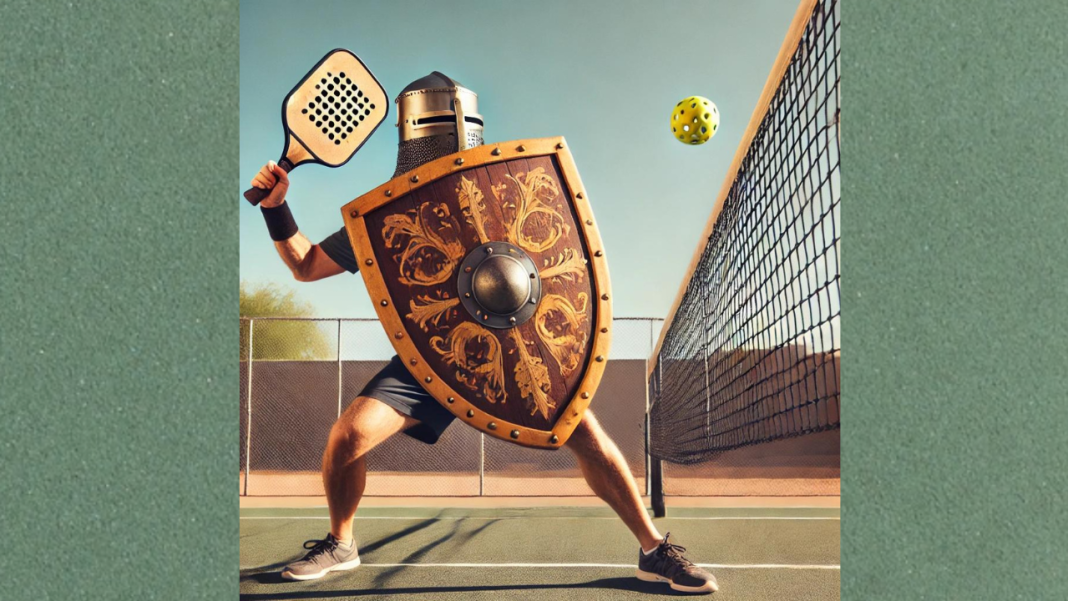
Blocking in pickleball involves intercepting an incoming shot before it bounces, usually at the non-volley zone (NVZ) line. Unlike a volley, where you hit the ball in the air after it has crossed the net, a block involves reacting to a hard-hit ball and redirecting it back to your opponents’ side.
How is Blocking Done?
- Ready Position: Start in a balanced athletic stance with your weight slightly forward and your paddle up in front of you, around waist height. This position allows you to react quickly to any incoming shot.
- Paddle Angle: As the ball approaches, angle your paddle slightly downward. The degree of the angle depends on the incoming ball’s trajectory. This downward angle helps to keep the ball low and prevents it from popping up, making it harder for your opponents to counterattack.
- Soft Hands: Keep your grip relaxed and absorb the energy of the ball with your paddle. Avoid swinging or hitting the ball; instead, let the ball bounce off your paddle, using a “cushioning” effect to control its direction.
- Target: Aim your block at the feet of the player who hit the shot or towards their weaker side. This forces them to hit up on the ball, making it difficult for them to generate power or angle.
Variations of Blocking:
While the basic blocking technique remains the same, there are slight variations you can use depending on the situation:
- Hard Block: If your opponents hit a particularly powerful shot, you may need to block it with more force to keep it in play. To do this, firm up your wrist slightly and meet the ball more directly, pushing it back with controlled aggression. This is often used when you are close to the NVZ line and have less time to react.
- Soft Block: Against a less aggressive shot, a softer block may be more appropriate. This involves simply absorbing the ball’s energy by “giving” slightly with your wrist as the ball makes contact and redirecting it with minimal force. This can be particularly effective against dinks, as it takes the pace off the ball and makes it difficult for your opponent to attack.
- Angled Block: If you have time and space, you can try to angle your block to one side or the other. This can be achieved by slightly adjusting the angle of your paddle face at the moment of contact. This can catch your opponents off guard and open up the court for a put-away.
Why is Blocking Useful:
Blocking is a valuable defensive tool for several reasons:
- Neutralizes Power: Blocking allows you to absorb the energy of a powerful shot and redirect it with minimal effort.
- Disrupts Rhythm: By blocking aggressive shots and slowing down the pace of the game, you can disrupt your opponents’ rhythm and force them to adjust their tactics.
- Creates Offensive Opportunities: A well-placed block can create opportunities for you or your partner to attack the net and finish the point.
- Psychological Advantage: Consistently blocking your opponents’ shots can create a psychological edge, making them more hesitant and less aggressive.
Blocking Against Different Opponents:
Blocking is particularly effective against “bangers” – players who rely on hard, powerful shots. By neutralizing their power and disrupting their rhythm, you can turn their aggression into your advantage.
However, blocking can also be effective against “dinkers” – players who specialize in soft, controlled shots. By blocking their dinks, you can prevent them from establishing control of the point and force them to hit a more difficult shot.
Pitfalls to Watch Out For:
- Overreaching: Avoid reaching too far for the ball, as this can lead to a loss of balance and an ineffective block.
- Hitting Too Hard: Remember to absorb the energy of the ball with your paddle and avoid swinging. Hitting too hard can send the ball out of bounds.
- Predictability: Mix up your blocks, using both hard and soft blocks, as well as angled blocks. Being predictable can allow your opponents to anticipate your shots and counterattack.
How To Improve:
- Wall Drills:
- Purpose: To develop the fundamental mechanics of blocking in a controlled environment.
- Setup: Stand about 10-12 feet away from a wall, with a partner standing behind you with a bucket of pickleballs.
- Execution: Your partner will toss or gently hit balls towards you at varying speeds and heights. Focus on getting into the proper ready position, angling your paddle correctly, and absorbing the ball’s energy with soft hands. Aim to direct the ball back to your partner’s position. As you get comfortable, have your partner vary the pace and trajectory of the balls to simulate different types of shots.
- Partner Drills:
- Purpose: To practice blocking in a more dynamic setting and simulate game-like situations.
- Setup: Stand at the NVZ line with your partner on the opposite side.
- Execution: Your partner will hit a variety of shots towards you, including drives, dinks, and lobs. Focus on reacting quickly, adjusting your paddle angle accordingly, and blocking the ball with the appropriate force. Start with easier shots and gradually increase the difficulty as you improve. You can also practice blocking both forehand and backhand shots.
- Game Situations:
- Purpose: To apply your blocking skills in a competitive environment and refine your strategic decision-making.
- Setup: Play regular pickleball games with your partner.
- Execution: Pay attention to your opponents’ shot tendencies and strategize when and how to use blocking. Focus on your court positioning, anticipating your opponents’ shots, and executing your blocks with precision. As you gain experience, you can start incorporating different types of blocks (hard, soft, angled) to keep your opponents guessing.
Additional Tips for Blocking Drills:
- Start Slow: Begin with slower-paced drills and gradually increase the speed and difficulty as you become more comfortable.
- Focus on Technique: Pay close attention to your form and make adjustments as needed.
- Communicate: Talk to your partner during drills and games to strategize and provide feedback.
- Stay Positive: Blocking takes time and practice to master. Stay patient and celebrate your successes along the way.
Incorporating these drills into your regular practice routine, allows you to develop your blocking skills and turn this defensive weapon into a powerful offensive tool. Remember, blocking is not just about reacting to shots; it’s about controlling the pace of the game, disrupting your opponents’ rhythm, and creating opportunities for you and your partner to win points.