

Most players grow up with one simple rule: if the ball is high, attack it. That advice works just enough to become a trap. In real matches, many of the balls that look attackable are the exact ones that lead to pop-ups, counterattacks, and fast point losses.
The difference between players who finish points cleanly and those who give them away is not power. It is judgment. Knowing when a high ball is truly a green light, and when it is not, changes how often you stay in control of rallies.
What “High” Really Means
Height alone does not decide whether a ball should be attacked. Balance, spacing, and opponent readiness matter more. In doubles, especially at the kitchen, a ball can sit above net height and still be a poor choice if you are rushed, jammed, or swinging into two prepared paddles.
A simple cue helps: if your contact point is behind your body or below net height, treat it as a no-go ball. Reset or place instead. The best attackers are selective, not automatic.
When You Are Off-Balance or Still Moving
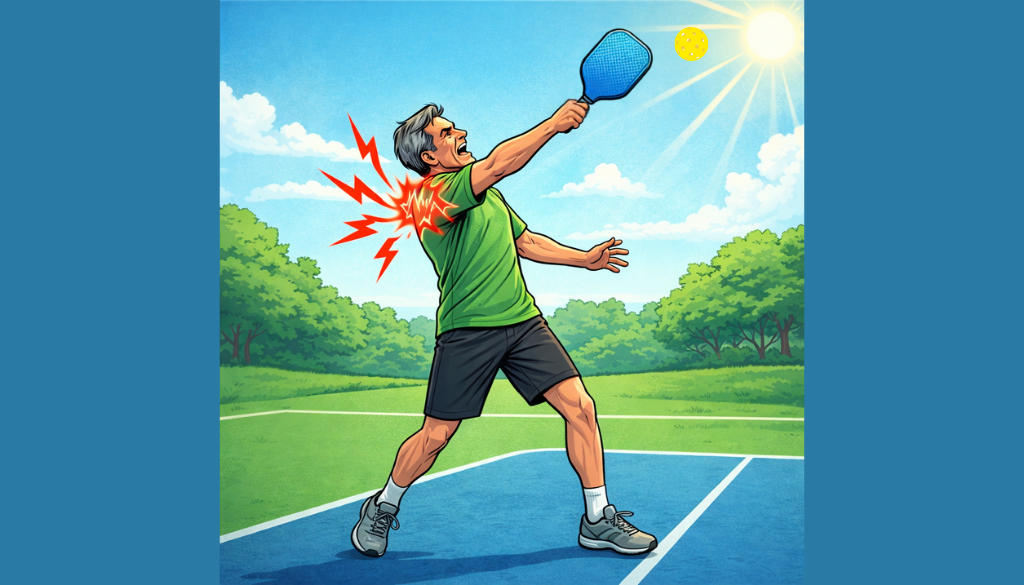
If you are leaning, retreating, or lunging, a high ball is rarely a smart attack. Power swings require stability. Attacking while off-balance usually opens the paddle face or forces late contact, which sends the ball up instead of down.
If your feet are not settled, your first job is recovery, not finishing. Let your feet settle before contact whenever possible. A soft reset or controlled block often produces a better ball one shot later.
When the Ball Is High but Crowding Your Body
High balls that get too close to your torso are deceptively difficult, especially on backhands at the kitchen. When the ball crowds you, your swing shortens and your paddle angle becomes unpredictable. This is one of the most common causes of pop-ups.
Good spacing means contacting the ball roughly a paddle-length in front of your hip, with your elbow comfortably away from your ribs. If the ball feels jammed, create space first with a small sidestep or shuffle. If there is no time to create space, block or reset rather than forcing an attack.
When Opponents Are Set and Waiting
Attacking into two balanced players with paddles up is rarely a winning play in doubles. Even a well-hit ball often comes back faster than it went in.
If opponents are planted and reading the play, patience becomes your advantage. Neutral balls to the middle, soft drops to the feet, or controlled resets that pull them out of position often create a safer attacking opportunity later. If you do choose to attack into set opponents, aim down at the body or hip to reduce their swing options rather than trying to paint angles.
When the Ball Is Still Rising or Falling Fast
Timing matters as much as height. Balls that are still climbing or dropping quickly are harder to strike cleanly. Attacking too early adds unwanted pace and lift. Attacking too late leads to reaching and mistimed contact.
The best attacks happen when the ball has settled into a comfortable strike window. Waiting a fraction of a second allows you to guide the ball instead of reacting to it.
When You Are in the Transition Zone
The transition zone, the area between the baseline and the kitchen, is the most punishing place to attack from. You have less margin and fewer defensive options if the ball comes back.
From midcourt, the default play is usually a drop or reset that lets you advance safely. The rare exception is a slow, floating ball that is clearly in front of you with time to set your feet. Everything else is a reset candidate.
What to Do Instead
Choosing not to attack does not mean giving up control. Soft resets to the kitchen neutralize pressure. Firm blocks to the middle limit angles. Deep, controlled balls buy time and restore position. These shots keep you in the rally and often force your opponents to take the risk instead.
The goal is not to avoid attacking. It is to attack from advantage rather than hope.
A Common Mistake: Confusing Attackable With Optimal
Many balls can be hit hard. Far fewer should be. For example, a shoulder-high dink at the kitchen into two set opponents is technically attackable, but rarely optimal. Long rallies reward players who remove risk first and earn their finishing chances.
Drills to Train Better Decisions
High-Ball Choice Drill
Stand at the kitchen line in doubles. Your partner feeds a mix of high balls: some slow and in front, others jammed at the body or arriving while you are moving. Before contact, call out “attack” or “reset.” Score one point for every correct decision and minus one for every wrong one, regardless of whether the shot goes in. The focus is decision-making, not winners.
Transition Hold Drill
Start one step inside the baseline in the transition zone. Your partner stands at the kitchen and feeds balls with moderate pace to your feet. You may only move forward after hitting a soft ball that lands in the kitchen. Miss or attack too early and you stay put. This trains discipline and staged advancement.
Delay-and-Decide Drill
Have a partner feed neutral balls from the kitchen. As the ball comes, say “wait” out loud before swinging. In that brief moment, check three things: are you balanced, is the ball in front of you, and are your opponents off-balance. Only attack if at least two are true.
Closing Thought
Restraint is not passive. It is strategic. The players who win consistently are not the ones who attack the most high balls, but the ones who attack the right ones. When you learn when not to swing, your best attacks start showing up naturally.