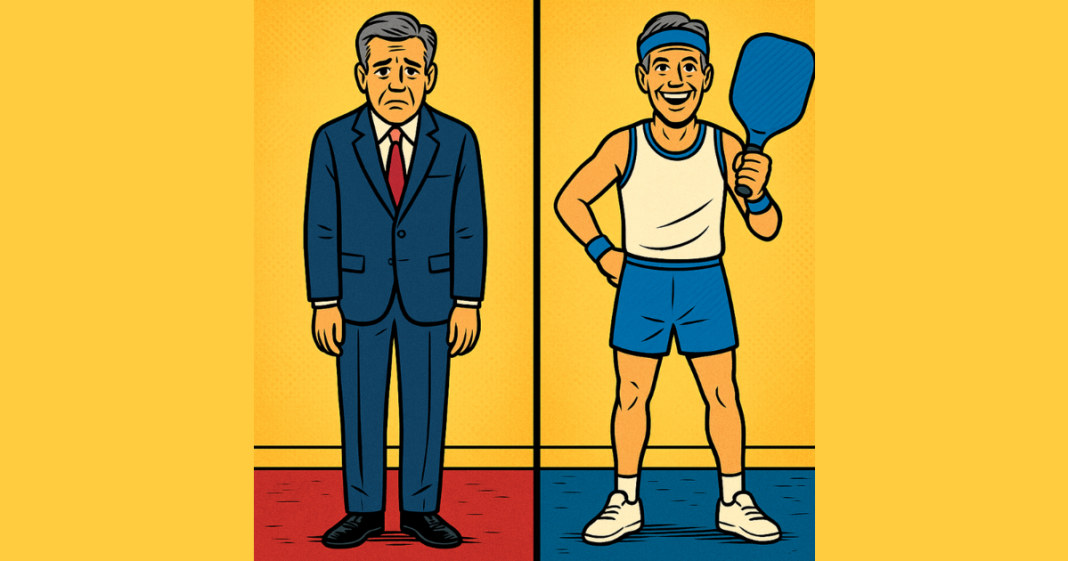


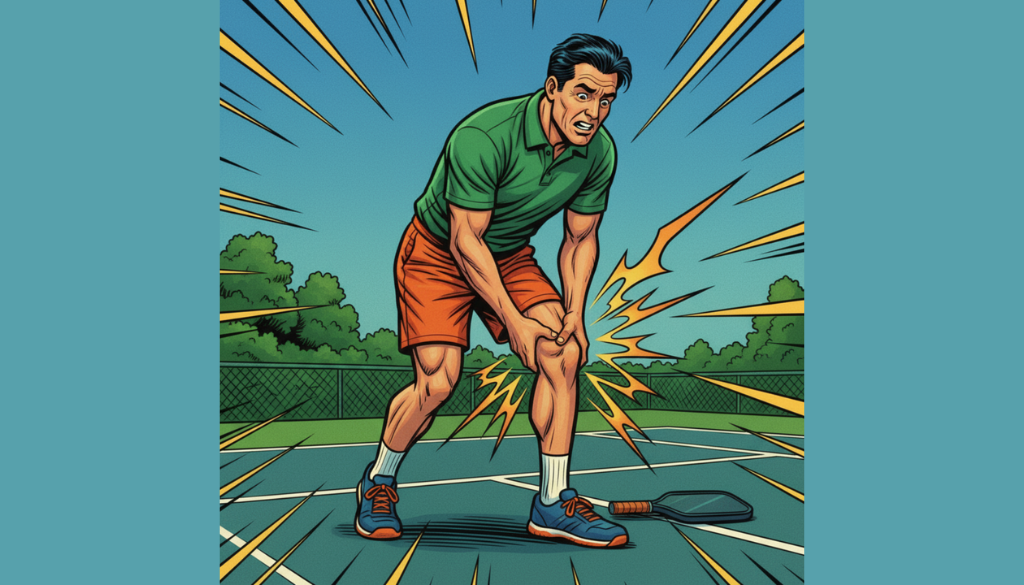
You’re locked in a perfect dinking battle at the kitchen line. Back and forth, side to side, each shot placing pressure on your opponent. Then – wham – your calf seizes up like someone grabbed it with pliers.
Game over. Rally over. And you’re left hobbling to the sideline while your partner apologizes for your “bad luck.”
Most players assume this comes with the territory – either you’re getting older, pushing too hard, or just having an off day.
But research reveals something different: cramps aren’t bad luck. I was your body warning you about a nutritional gap that affects up to 70% of adults over 50.
The Banana Myth
When cramps strike, someone always suggests the same fix: “Eat a banana!” It makes sense – bananas contain potassium, which helps muscles function. But here’s what sports medicine research shows: most exercise-related cramps aren’t caused by low potassium.
The real culprit?
Magnesium depletion
Unlike potassium, magnesium gets depleted rapidly through sweat during extended play. Without adequate magnesium, muscle fibers literally can’t relax properly after contracting. That’s why cramps often hit hardest after long rallies, not at the start of play.
You can eat bananas all week, but if magnesium stores are low, those painful calf and hamstring cramps will keep ambushing you mid-game.
The Magnesium Problem No One Talks About
Here’s where magnesium deficiency gets sneaky – it doesn’t announce itself with obvious symptoms. Instead, it masquerades as things we often attribute to aging:
- You wake up on game day already tired
- Your legs feel heavy by the third game
- Recovery takes longer than it used to
- Sleep feels restless instead of refreshing
Clinical studies reveal that magnesium absorption naturally decreases with age, while requirements actually increase. The result?
Players who should feel energized instead find themselves thinking, “Maybe I’m just slowing down.” When the real issue is cellular – their muscles are running on empty.
The Fix That Actually Works
Good news: once you know what’s missing, the solution is straightforward.
1. Add Evening Magnesium
Take magnesium glycinate or citrate in the evening – it supports both recovery and sleep quality. These forms offer superior absorption with minimal digestive upset.
2. Upgrade Your Hydration Strategy
Standard sports drinks focus heavily on sodium and potassium while ignoring magnesium entirely. You need to replace what you’re actually losing through sweat.
Many players in our community have found success with Advanced Bionutritionals’ Advanced Hydration Formula. Unlike typical electrolyte drinks, this formula includes the complete mineral profile your muscles need – sodium, potassium, AND magnesium. It’s specifically designed for active adults who want to replace what they’re really losing during extended play.
3. Focus on High-Impact Foods
Dark leafy greens, pumpkin seeds, almonds, and dark chocolate provide substantial magnesium. While reaching therapeutic levels through food alone requires significant quantities, every bit helps.
The Bottom Line
Cramping and fatigue don’t have to be accepted as inevitable parts of staying active after 50. What feels like aging is often the body signaling a specific nutritional need.
Before your next court session, ask yourself: are those cramps and sluggish mornings really about getting older – or could they be your body’s way of requesting the mineral it needs to keep you playing strong?
For many players, the difference between dragging through games and dominating the kitchen line comes down to giving your muscles the complete nutrition they’re asking for.