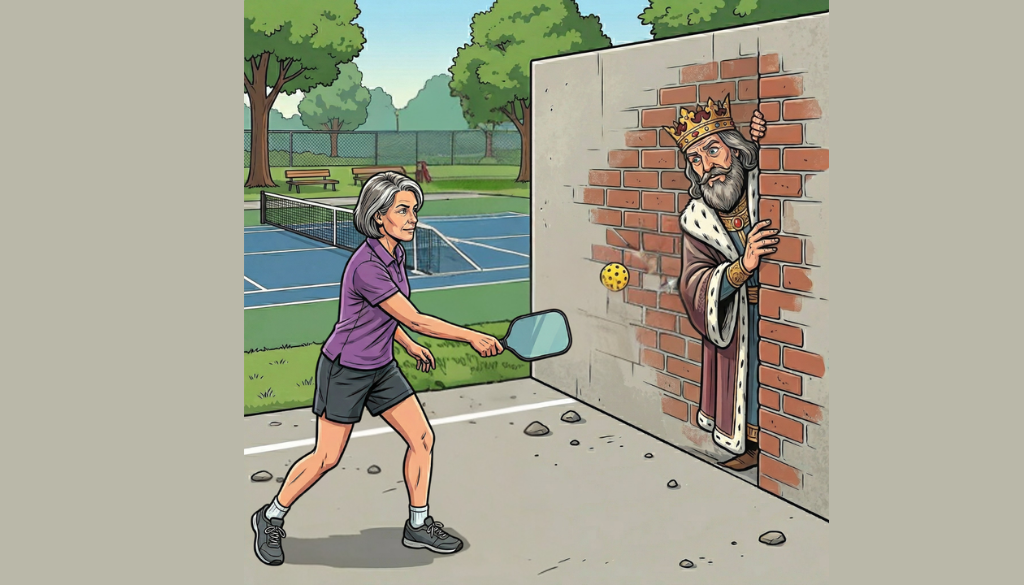



Most players treat the reset like a surrender.
You’re stretched, under pressure, somewhere in the transition zone or defending at the kitchen — and the goal is simple: soften the ball, survive, and get back into the point.
And that works… until your opponents realize that’s all you’re doing.
When every tough ball gets the same soft reset, good players stop worrying. They lean forward. They close space. They start hunting the next ball.
That’s where the reset fake changes everything.
Instead of just neutralizing the rally, you start controlling it.
What the Reset Fake Is
The reset fake is showing your opponent a soft, defensive reset… and then sending them something else.
Not a wild speed-up. Not a risky swing.
Just a controlled change at the last moment.
It might be:
- A firm ball to the feet instead of a dead reset
- A guided push through the middle instead of a drop
- A subtle roll instead of a soft block
The key is this: your preparation looks identical.
Your paddle is out front. Your stance is quiet. Your body says “reset.”
But your contact produces a different result.
This is less about deception and more about the principle advanced players rely on: same preparation, different outcome.
Why It Works
When your opponent sees:
- A compact motion
- A slightly open paddle face
- A low, balanced position
They assume a soft ball is coming.
So they:
- Step forward
- Relax their hands
- Prepare for a dink or easy reset
That small assumption is where you gain the advantage.
You don’t need power. You just need to send a different ball than they expected.
A slightly firmer or better-directed ball can:
- Jam their feet
- Catch them mid-step
- Force a late or awkward contact
And now you’re no longer defending — you’re shaping the rally.
How to Do It
Everything starts from your standard reset position:
- Paddle out in front around chest height
- Slightly open face
- Contact point out in front
- Balanced base with your weight under you
And just as important:
- Keep your grip pressure the same for both the reset and the fake
If your grip tightens only on the fake, your tempo changes. That’s one of the easiest tells for better players to read.
From that same setup, the difference happens at contact — not in your swing.
1. The Firm Reset to the Feet
You set up for a soft reset, but instead of fully absorbing the ball, you let more of the incoming pace carry through.
Think:
- Firm wrist
- Quiet hand
- Slightly less “give” at contact
The ball travels lower and deeper and lands closer to your opponent’s feet rather than dropping softly into the kitchen.
You’re not swinging more — you’re simply redirecting more of what you received.
Use this when:
- The ball is at or slightly above net height
- You’re balanced and not reaching wide
2. The Middle Push
Same calm setup. Same compact motion.
But instead of dropping the ball short, you guide it through the middle with a touch more pace.
The target matters:
- Aim just above net height
- Send it through the gap between opponents
This works especially well when both players are leaning forward expecting a soft ball.
You’re not overpowering them — you’re making them deal with a ball that arrives sooner than expected in a space they don’t fully own.
Use this when:
- The ball is at net height or slightly higher
- Both opponents are creeping forward
3. The Soft Roll
From the same reset position, keep the paddle face neutral to slightly open and use a short low-to-high path to brush up on the ball.
You’re adding shape, not force.
This is not a drive.
It’s a controlled roll that carries a little deeper and faster than a standard reset while still staying low.
Closing the face too much here leads to errors — especially on lower balls. The goal is lift and control, not downward force.
Use this when:
- The ball sits slightly higher than ideal reset height
- You have enough time and balance to shape it
Avoid this on low, defensive balls — those still call for a true reset.
What to Look For
The reset fake shows up when your opponent gives you the signal.
Look for:
- Players leaning forward early
- Paddle tips dropping in anticipation
- Opponents stepping into the kitchen before you’ve hit
- Patterns where every ball you’ve sent has been soft
Also pay attention to the ball itself.
If the ball is low and you’re off balance, reset.
If the ball is manageable and your opponent is guessing, you have options.
You don’t force the fake — you recognize it.
Common Mistakes
Turning It Into a Full Speed-Up
This isn’t about power. The moment your swing gets bigger, you lose disguise and increase risk.
Telegraphing the Change
Any change in body position, backswing, or tempo gives it away before contact.
Changing Grip Pressure
If your hand tightens only on the fake, your paddle speed and timing change — and good players will see it.
Using It on the Wrong Ball
Low balls and off-balance positions are still reset situations.
Aiming Too Close to the Lines
The value of the reset fake is that it’s controlled and repeatable. Stick to high-percentage targets — feet, body, middle — not sideline winners.
Overusing It
If every reset becomes a fake, it stops working. The contrast is what creates the advantage.
Drills to Build the Reset Fake
Drill 1: Two Resets, One Fake
Partner feeds balls to your transition zone.
You must:
- Hit two standard soft resets
- Then execute one reset fake
This builds consistency first, then variation.
Drill 2: Read and React
Partner varies their posture:
- Leaning forward = fake
- Balanced = reset
You must decide before contact.
This connects recognition to execution.
Drill 3: Middle Pressure Game
Play points starting in the transition zone.
You can only:
- Reset softly
- Or send the ball through the middle
No sideline targets.
This forces you to feel how effective controlled middle pressure is when disguised.
Final Thought
The reset is one of the most important shots in pickleball.
But if it only ever means one thing, it becomes easy to read.
The players who control rallies don’t just reset well.
They make that same motion produce different outcomes.
One soft.
One slightly dangerous.
And their opponents never quite settle in.