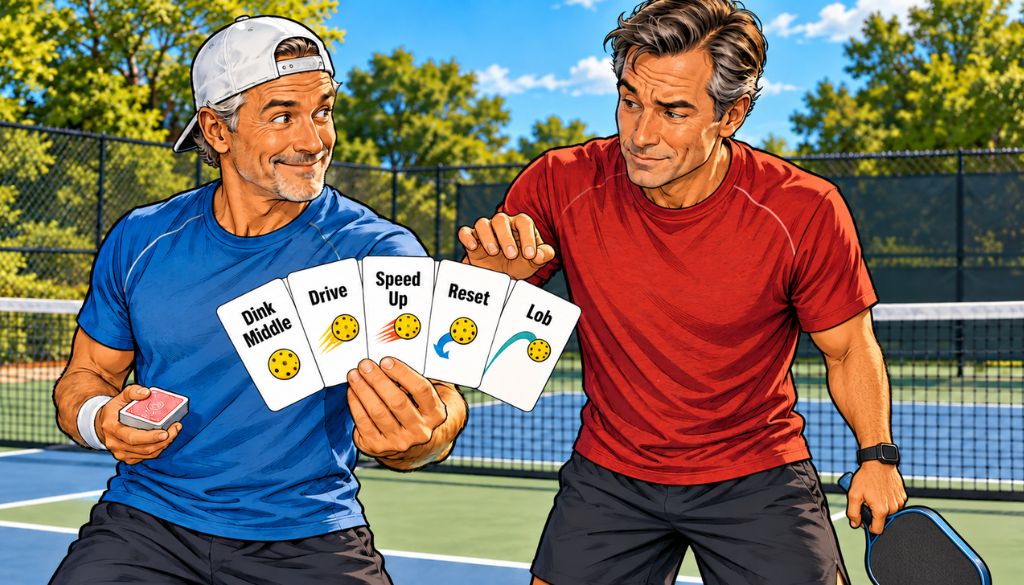


There is a point in some dink rallies when nothing has really changed, but one player decides something needs to happen.
The ball isn’t particularly high. The opponent isn’t badly out of position. There isn’t a big opening. The rally has simply lasted long enough that somebody gets impatient.
So they speed it up.
Sometimes they get away with it. Sometimes the ball goes into the net or sails long. And sometimes the attack goes directly into an opponent who was perfectly balanced and waiting for exactly that decision.
The Dink Patience Drill is designed to break that habit. Players are required to maintain a controlled dink rally before an attack is even available. But the count alone doesn’t give anyone permission to speed up. Once the required number of dinks has been reached, you still have to wait for a ball that actually deserves to be attacked.
That distinction is the entire point of the drill.
Patience isn’t about seeing how long you can dink. It’s about continuing to make good decisions no matter how long the rally lasts.
Why Dink Patience Is Harder Than It Sounds
“Be patient” sounds like simple advice until you’re standing at the kitchen (non-volley zone) exchanging your tenth dink.
Players often become uncomfortable when a rally lasts longer than expected. They feel as though they should be doing something more aggressive, particularly if several balls have gone back and forth without anyone gaining an obvious advantage.
That feeling can create attacks that have very little to do with the ball.
Instead of recognizing an opportunity and attacking it, the player decides to attack first and then tries to make the current ball qualify.
That’s backward.
A good dink rally isn’t dead time before the real point begins. The dinks themselves are creating the conditions for what comes next. You’re moving an opponent, changing depth, testing their balance and trying to produce a ball that can be attacked from a strong position.
The Dink Patience Drill gives you enough repetitions to learn the difference between waiting for an opportunity and getting tired of waiting.
Setting Up the Drill
Two players begin across from each other at the kitchen line. You can practice straight ahead or crosscourt, although crosscourt is a good place to begin because the additional distance provides more margin and makes it easier to sustain longer rallies.
Start with a six-dink minimum.
The first six successful dinks must remain dinks. Neither player is allowed to speed the ball up, even if an attackable ball appears early in the rally. For the first few rounds, this deliberately exaggerated restriction forces both players to experience a longer exchange instead of looking for the earliest possible exit.
After the sixth dink, attacks become available.
They do not become mandatory.
If ball seven is low and difficult, dink it. If ball eight gives you a slightly higher bounce but you’re reaching, dink it. If ball nine finally sits up while you’re balanced and able to attack from a strong position, now you have a decision to make.
Once either player legitimately attacks, play the point out.
Then reset and begin another six-dink sequence.
The Count Is a Training Tool, Not the Goal
There is nothing magical about six dinks.
You could use eight. You could eventually use ten. The number simply creates enough time for impatience to show itself.
Without the minimum, many players will turn a patience drill into a speed-up drill within three balls. Requiring a longer exchange removes the attack temporarily and makes players solve a different problem: how do I continue applying pressure without speeding the ball up?
That question changes the quality of the practice.
You may begin varying dink depth. You might move your partner wider and then bring the ball back toward the middle. You may start noticing which balls make your partner reach or contact the ball from a less comfortable position.
Now you’re not merely keeping the rally alive.
You’re constructing it.
Eventually, the minimum count should disappear. In a match, nobody tells you that you’re allowed to attack because the rally reached ball seven. The count exists only long enough to teach the patience you want to carry into normal play.
What Actually Makes a Ball Attackable?
This is where the drill becomes more interesting than simply counting dinks.
Players often define an attackable ball only by height. A ball pops up, so they attack it.
Height certainly matters, but it isn’t the only consideration.
Your own position matters too. A slightly elevated ball may look tempting, but if you’re reaching, moving sideways or recovering from the previous dink, you may not be in a good position to accelerate through it with control.
The opponent’s position matters as well. If both opponents would be balanced with paddles ready, a marginal speed-up may accomplish very little. If one has been pulled wide, is recovering, or has left an uncomfortable target available, the same ball may present a much better opportunity.
The drill should gradually teach you to evaluate the whole situation.
Is the ball attackable?
Am I in position to attack it?
And will the attack actually create something useful?
Sometimes the correct answer is still another dink.
Patience Does Not Mean Passive
There is a danger in any drill called the Dink Patience Drill: players may start floating harmless balls back and forth because they’re trying to keep the rally going.
That’s not the skill we’re after.
Good patience can still create pressure.
Move the opponent. Change the depth of your dinks. Make them contact balls near their feet. Use safe angles when they’re available. Give them balls that require movement and adjustment while maintaining enough margin to keep yourself out of trouble.
You’re trying to create a mistake without forcing one.
Perhaps your first few dinks do nothing dramatic. Then one moves your opponent slightly wider. The next keeps them there. Their reply comes back a little higher. Now you’re balanced, they’re recovering, and the ball is in a position you can attack.
That isn’t passive play.
You built the opportunity.
The Most Important Ball May Be the One You Don’t Attack
One of the best moments in this drill happens when a player receives a ball they normally would have sped up and chooses not to.
Maybe it’s a little high but too close to the body. Maybe the player is still moving. Maybe the target isn’t there. Maybe the ball is technically attackable, but another dink is simply the higher-percentage choice.
That’s progress.
Players sometimes believe that passing up an attackable ball means they’ve missed an opportunity. But there is no rule saying you must attack the first ball that qualifies.
You can let one go.
If you continue applying pressure with your dinks, another opportunity may appear, and the next one may be considerably better.
The drill teaches you to stop treating every possible attack as your last chance to be aggressive.
The Hidden Lesson: Learn to Create the Ball You Want
At first, the Dink Patience Drill feels like it’s teaching restraint.
Keep practicing it and something else begins to happen.
You start recognizing which dinks produce better attack opportunities.
Maybe a deeper dink toward your partner’s backhand produces more elevated replies. Perhaps moving them wide and then returning toward the middle makes them reach. Maybe a dink toward the feet consistently produces a ball you can handle more aggressively on the next exchange.
Now patience has become strategy.
Instead of waiting around hoping your opponent eventually gives you a high ball, you’re using the dink rally to increase the chances that one appears.
That is a much more useful version of patience.
You’re not waiting for the point to happen.
You’re building it.
Common Mistakes
The most obvious mistake is attacking immediately after the minimum count has been reached. If every repetition goes six dinks and then speed-up, you’ve simply created a different bad habit. The sixth dink unlocks the option to attack. It doesn’t make the seventh ball attackable.
Another mistake is counting so intently that the quality of the dinks disappears. The rally shouldn’t become six cooperative balls followed by “real pickleball.” Use those first six dinks to move, pressure and observe your opponent.
Players also sometimes become too conservative because they want to prove they can be patient. If a clearly attackable ball appears after the minimum and you’re balanced with a useful target available, take it. The goal isn’t to avoid attacking. It’s to stop attacking for the wrong reason.
Watch for impatience showing up in the dinks themselves, too. Players who resist speeding up sometimes begin forcing sharper angles or hitting dinks harder instead. That’s simply impatience wearing a different outfit.
Finally, don’t judge every attack by whether it wins the rally. A good speed-up may produce a weak block or force the opponent into a defensive counter. The quality of the decision matters more than whether the first attack ends the point.
Beginner Variation
Start with a predictable six-dink sequence. Both players cooperate enough to keep the rally going, and no attacks are permitted during those first six balls.
After six, continue dinking until one player receives an obviously attackable ball. Keep the standard fairly clear at first. You’re looking for a ball that sits up enough to attack comfortably while you’re balanced.
Once someone attacks, stop the repetition rather than playing the point out. Discuss whether the ball was actually a good choice, then start again.
This keeps the early version focused entirely on recognition.
Intermediate Variation
Use the same six-dink minimum, but play the point out after the first attack.
Score the decision rather than just the rally. A player earns a point for choosing an appropriate ball to attack and another point if the attack creates a weak response or wins the rally. Attacking a poor ball costs a point.
If neither player gets an appropriate attack opportunity, continue dinking. There is no maximum rally length.
That last rule matters. Nobody gets to manufacture an attack simply because the rally has reached 15 or 20 balls.
Advanced Variation
Remove the minimum completely.
Now play the dink rally normally, but keep the same standards you developed during the restricted version.
An attack could happen on ball three. It might not happen until ball fifteen.
The question is no longer whether you’ve completed enough dinks. It’s whether you’ve actually created or received a ball worth attacking.
To make the drill more demanding, keep track of poor attacks rather than winners. Play several rallies and count how many times you sped up a ball while reaching, off balance, contacting too low, or attacking an opponent who was completely prepared.
Try to reduce that number over successive rounds.
That’s a much better measurement of patience than seeing who can survive the longest dink rally.
A Simple 15-Minute Session
Spend the first three minutes cooperative dinking with no attacks at all. Don’t dink passively; use placement and depth to move each other while maintaining control.
For the next four minutes, use the six-dink minimum. After six, attack only when a legitimate opportunity appears, then play the point out.
Spend another four minutes using the intermediate scoring system. Pay particular attention to attacks that don’t work. Was the execution poor, or was the decision itself questionable?
For the final four minutes, remove the count and play normally. The drill restriction is gone, but the standard remains.
This is the most revealing part of the session. If you immediately return to speeding up the third or fourth ball simply because you’re allowed to, the earlier repetitions haven’t transferred yet.
If you can play a long dink rally without feeling that you have to do something, you’re getting there.
Final Thought
Dink patience isn’t measured by how many balls you can keep in the kitchen.
You can hit twenty dinks and still make a terrible decision on number twenty-one.
The real skill is maintaining the same quality of judgment throughout the rally. Keep applying pressure. Keep watching the opponent. Keep recognizing what the ball is giving you. And when nothing is there, be perfectly comfortable hitting one more dink.
Eventually, someone will create an opportunity.
Your job is to make sure you’re attacking because you saw it, not because you got tired of waiting for it.