

If you’ve been watching pickleball globally, you’ve probably noticed the same thing: growth isn’t random anymore.
Countries aren’t just “discovering” the sport. They’re deciding to build it.
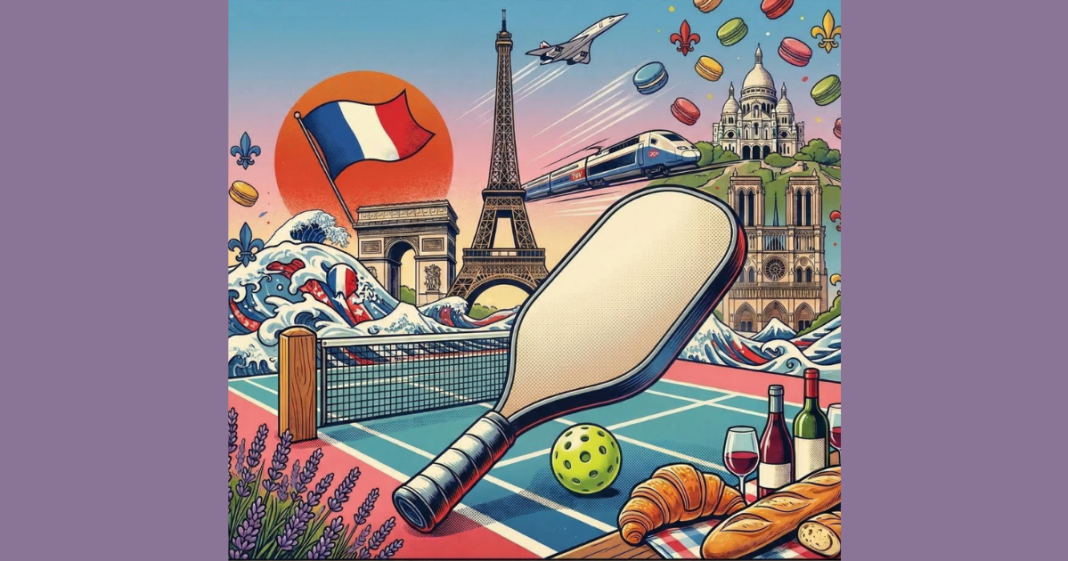
France just made one of the clearest moves yet.
In early 2026, the French government officially handed control of pickleball to the French Tennis Federation. That’s not a small administrative update. In France, one federation gets full authority over a sport—rules, coaching, competition, development. Once that happens, the sport moves out of the fringe and into a system designed to scale.
And now pickleball is inside one of the most established sports infrastructures in Europe.
The French Tennis Federation already runs thousands of clubs and has experience expanding other racket sports. That matters, because pickleball in France doesn’t have to grow from scratch. It can plug directly into existing courts, coaches, and membership bases.
We’ve seen how powerful that model can be.
Padel followed a similar path across Europe—absorbed into the tennis ecosystem, then rapidly expanded through clubs and organized play. What took years organically can happen much faster when the infrastructure is already there.
Pickleball in France is now set up for that same kind of acceleration.
There’s already a base. Estimates put the player count in the tens of thousands, and it’s growing. Not massive yet, but that’s not the signal to watch. The signal is organization.
The French Tennis Federation is now running structured events, including national-level tournaments. That’s when a sport starts to stabilize. Players know where to play, how to compete, and what progression looks like. Coaches begin teaching it with intention. Clubs start allocating space.
And once that happens, growth tends to compound.
What’s interesting is that France is approaching this differently than the U.S.
Here, pickleball was built from the ground up—parks first, players first, system later. In France, the system is arriving early. The structure is being put in place before the player base fully explodes.
That can change the trajectory.
You’re likely to see more crossover from tennis, especially from players looking for a competitive outlet with less physical strain. You’ll see clubs introduce pickleball alongside existing offerings rather than as an afterthought. And you may see a more formal development pipeline take shape sooner.
It’s a different kind of growth curve.
And it raises a bigger question as more countries follow this model.
If pickleball continues expanding through national federations and established sports systems, the global game won’t just get bigger—it may start to look different. Different player backgrounds, different styles, different pathways into the sport.
We’re already seeing the early stages of that.
France just made it official.