

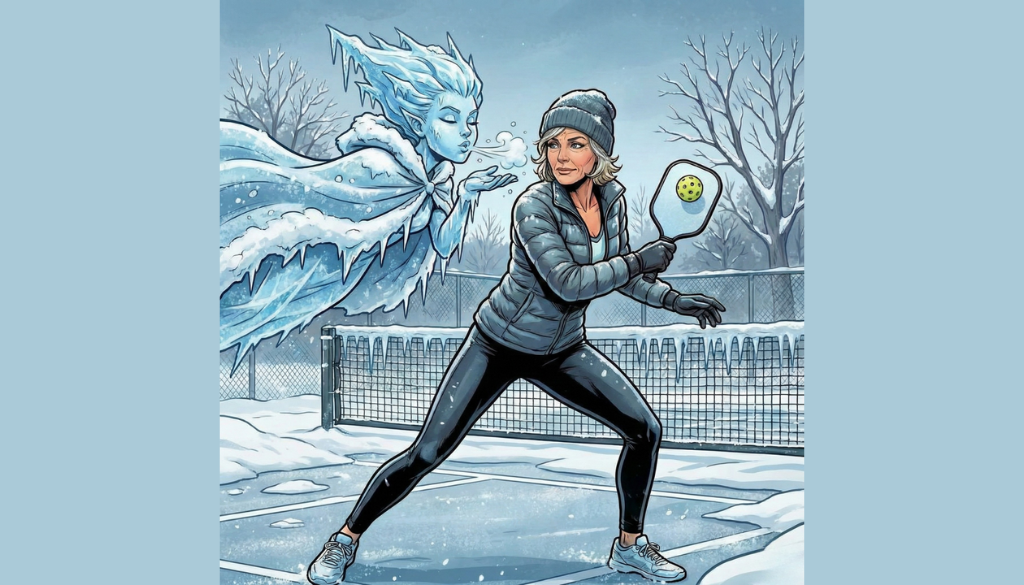
Winter pickleball has a familiar storyline.
You step onto the court feeling confident. Then the first few points arrive… and your knees feel stiff, your hips slow, and your elbows oddly uncooperative. By game two, you’re better. By game three, you’re finally playing like yourself.
Here’s the truth: it’s not age. And it’s not “needing more time to loosen up.”
It’s biology – and a little physics.
The Cold-Weather Joint Problem No One Talks About
Inside every joint is synovial fluid. Its job is simple: lubricate movement so your joints glide instead of grind. In warm conditions, it’s slick and efficient.
Cold changes that.
Lower temperatures make synovial fluid thicker and less slippery. When that happens, joint movement takes more effort. Think of trying to stir honey straight from the fridge versus honey warmed on the counter. Same substance. Very different performance.
Cold weather also tightens blood vessels in your arms and legs. That reduces circulation, slows tissue warming, and increases stiffness – especially in knees, hips, shoulders, and elbows.
That “rusty” feeling before the first serve? It’s real. And it’s mechanical, not personal.
Why Pickleball Exposes Cold Joints Faster Than Other Sports
Pickleball doesn’t ease you in.
You go from standing still to quick lateral moves, sudden reaches, and reaction volleys at the kitchen line. There’s very little gradual buildup – especially during the first game of the day.
Add in cold indoor courts, long waits between games, and stop-and-start rallies, and your joints cool off faster than they warm up.
That’s why winter pickleball often feels hardest right at the start – when your body hasn’t caught up yet.
What to Do Before Game One (So You Don’t Donate the First Game)
If winter thickens joint fluid, the solution is obvious: warm it up before play starts.
Here’s what works.
1. Warm up longer than you think you need Five minutes might work in July. In winter, aim for 10–15 minutes. Walk briskly, shuffle side to side, circle your arms, and add gentle lunges. The goal isn’t sweating – it’s getting fluid moving inside your joints.
2. Use heat before you leave home A warm shower or heating pad on knees, hips, or elbows gives your joints a head start. Warm joints move better. Always.
3. Keep joints warm, not just muscles Compression sleeves or light braces help retain heat and support circulation. Many winter players notice less stiffness simply by keeping knees and elbows warm between points.
4. Don’t fully stop between games Standing still lets joints cool quickly. Stay lightly active – walk the baseline, stretch gently, keep blood moving.
Extra Help From the Inside
Even with smart warm-ups, winter can still make joints feel less forgiving. That’s why many active players add nutritional support aimed at managing everyday inflammation and recovery.
Curcumitol-Q is one option players often mention. It’s a patented, highly absorbable form of curcumin designed to support joint comfort and mobility. Curcumin is widely studied for its antioxidant properties and its role in helping the body handle normal inflammation from activity.
Used daily, it can complement good warm-up habits – especially during colder months when joints tend to feel tighter.
The Fit Pickler community gets an exclusive discount + a 90-day guarantee. Get Curcumitol-Q here.
The Bottom Line
Winter doesn’t mean your joints are failing you.
It means they need better preparation.
Warm up longer. Stay warm. Keep moving. Support recovery.
Do that, and winter pickleball stops feeling like a grind – and starts feeling like the game you love, from the very first point.
And yes… you might even win game one.