

Getting to the kitchen is one of the first strategic lessons players learn in doubles pickleball. The team at the kitchen line generally has an advantage over the team stuck near the baseline, so the message is simple: get forward.
The trouble starts when “get to the kitchen” becomes “get to the kitchen no matter what.”
There are plenty of rallies when moving forward is exactly the right decision. There are also moments when taking another step simply puts a player in a worse position for the ball that is about to arrive.
The goal is still to reach the kitchen. The question is whether the previous shot has actually created an opportunity to move.
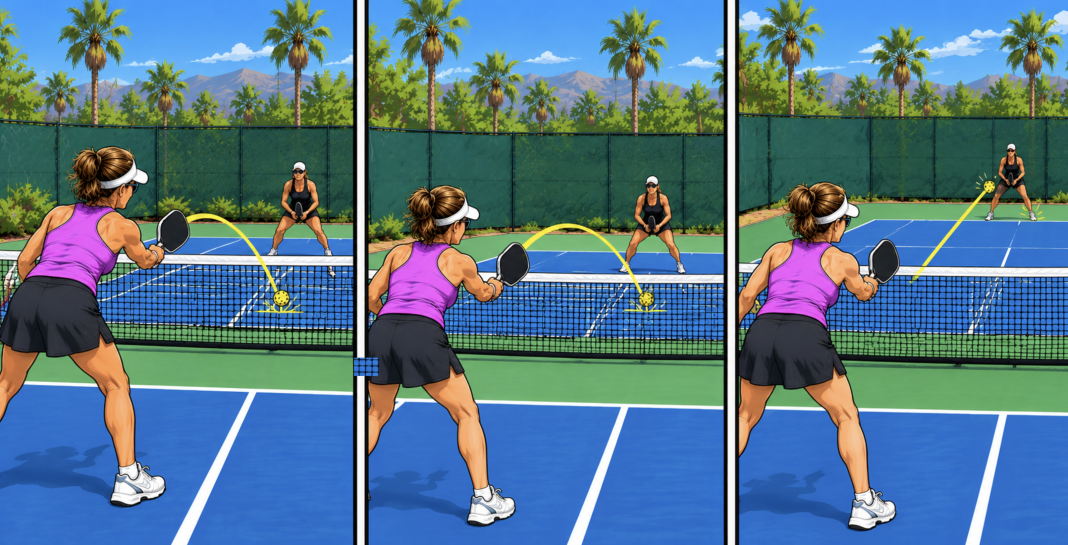
A High Drop Hasn’t Earned Forward Movement
The easiest example is a third-shot drop that sits too high.
The player recognizes that the ball landed in the kitchen and immediately starts forward. But landing in the kitchen does not automatically make a drop good enough to follow.
Watch the opponent instead.
If the opponent is reaching down and contacting the ball below net height, there may be an opportunity to advance. If the opponent is standing comfortably at the kitchen with the paddle high and the ball available for an aggressive volley, moving forward can mean running directly into the attack.
Staying back for one more ball may be the better choice.
That does not mean abandoning the attempt to reach the kitchen. It means using another drop or reset to create a better opportunity.
A Hard Drive Doesn’t Always Mean Follow It
The same problem happens after third-shot drives.
A good drive can produce a weak block, pop-up, or short reply that allows the serving team to move forward. But a drive that the opponent handles easily may come back just as quickly as it was sent.
Charging behind every drive can leave a player halfway through the transition area when that ball arrives.
Again, the opponent’s contact provides the answer.
If the drive jams the opponent, forces a defensive block, or creates a ball that will arrive with less pace, forward movement may make sense. If the opponent is balanced with the paddle ready and has plenty of time, staying farther back can provide more time to handle the reply.
The drive itself is not permission to advance. What the drive does to the opponent is what matters.
Don’t Move Forward Just Because Your Partner Does
Doubles partners should generally move together, but that does not mean following a bad decision simply to stay even.
If a partner rushes forward behind an attackable ball, the other player may instinctively follow. Now both players are moving when the opponent has an excellent opportunity to hit down at their feet.
Sometimes the better response is to hold position and prepare for the ball that is likely to come back.
Ideally, partners learn to read the same cues and advance together. If one player continually moves too early, that is something to address between rallies rather than repeatedly turning one positioning mistake into two.
Team movement matters, but so does recognizing when the team has not yet earned the next position.
Stay Back When You’re Still Off Balance
Sometimes the previous shot was good enough to follow, but the player who hit it is not in a good position to move.
A deep return may have pulled the hitter toward the sideline. The player may have been reaching, moving backward, or recovering from an awkward contact. Even an excellent drop does not instantly restore balance.
Trying to sprint forward from that position can create another problem.
There is nothing wrong with using the time after the shot to recover first. Get the feet underneath the body, regain court position, and prepare for the next ball. If another drop is necessary, use it to create a better opportunity to advance.
The quality of the shot matters, but so does the quality of the position from which the player is trying to move.
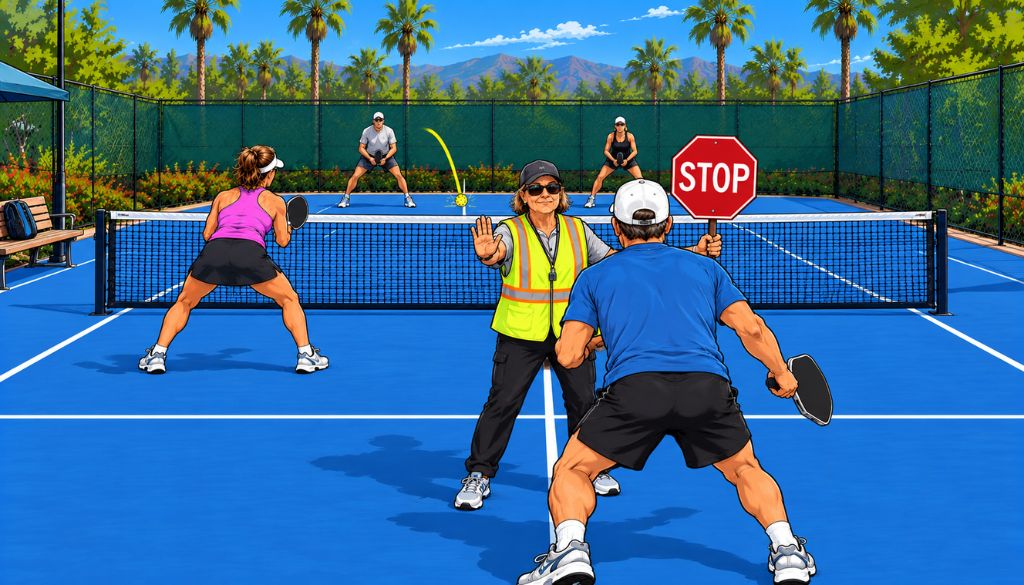
Stop When the Next Ball Is Arriving
Staying back does not always mean remaining at the baseline.
Often the smarter choice happens somewhere in the transition area.
A player hits a good drop and moves forward several feet. The opponent is now about to contact the ball. At that moment, continuing toward the kitchen may be less important than stopping and becoming balanced.
This is where players sometimes get caught by the idea that they should never stop in the transition area. They treat it as a place that must be escaped as quickly as possible.
But the transition area is not dangerous simply because a player is standing there. It becomes difficult when the player is caught moving through it as the ball arrives.
If there is not enough time to reach the kitchen before the next shot, stop. Deal with the ball. Then look for another opportunity to move.
Reaching the kitchen in two or three stages is often much safer than trying to get there in one rush.
Don’t Turn Patience Into Permanent Defense
There is another side to this strategy.
Some players become so cautious about moving forward that they never take the opportunity when it appears. They hit a good drop, stay back, hit another good drop, stay back again, and eventually give the opponents a ball they can attack.
Staying back should be a temporary decision, not the game plan.
The purpose is to wait for a better opportunity to advance. When the opponent is forced to hit up, reaches for a low ball, or sends back a soft reply, use the time that shot creates.
Patience at the baseline is useful only if the player is still looking for the moment to leave it.
The Mistake: Treating the Kitchen as the Immediate Goal
The kitchen line is where the serving team wants to end up, but that does not mean it has to get there immediately.
The real objective is to arrive in control.
A player who reaches the kitchen while balanced and ready has gained a strong court position. A player who arrives while running into an opponent’s attack may technically have reached the same line, but has gained very little.
That changes the question after every third shot.
Instead of asking, “Can I get to the kitchen?” ask, “How much forward movement did that shot earn?”
Sometimes the answer is all the way.
Sometimes it is three steps.
Sometimes the answer is none.
Drill: Earn Your Way Forward
Start one player at the baseline and a partner or feeder at the opposite kitchen line.
The baseline player hits a drop or drive. The feeder varies the response based on the quality of the shot. A strong third shot should produce a softer or lower reply. A higher or easier third shot should be attacked or volleyed firmly.
The baseline player decides whether to advance, stop partway, or remain back.
The important rule is that moving forward is not automatically rewarded. The player only succeeds by reaching the kitchen balanced and prepared for the next ball. If rushing forward results in being caught while moving, start the sequence again.
As the drill progresses, make the feeds less predictable so the decision has to come from reading the opponent rather than following a predetermined pattern.
Final Thoughts
Getting to the kitchen remains one of the most important goals in doubles pickleball. But getting there sooner is not always the same as getting there better.
A high drop, an easily handled drive, an off-balance shot, or a ball that is already coming back may all be reasons to delay the move.
Stay back when the rally has not yet given you permission to advance. Then use the next ball to try again.
The kitchen is still the destination. There is simply no prize for being the first player to arrive there in trouble.