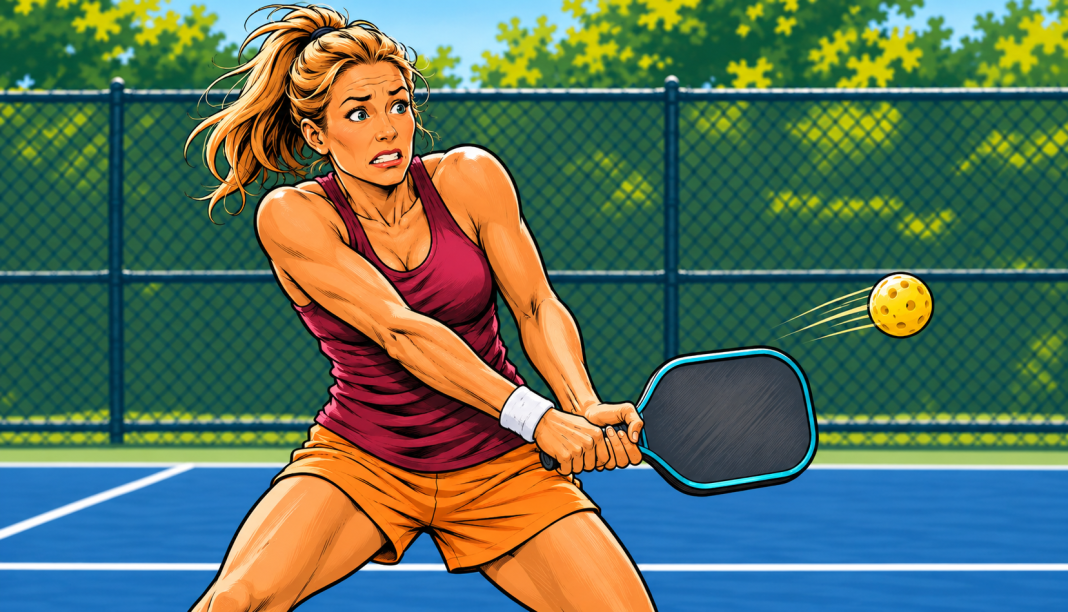


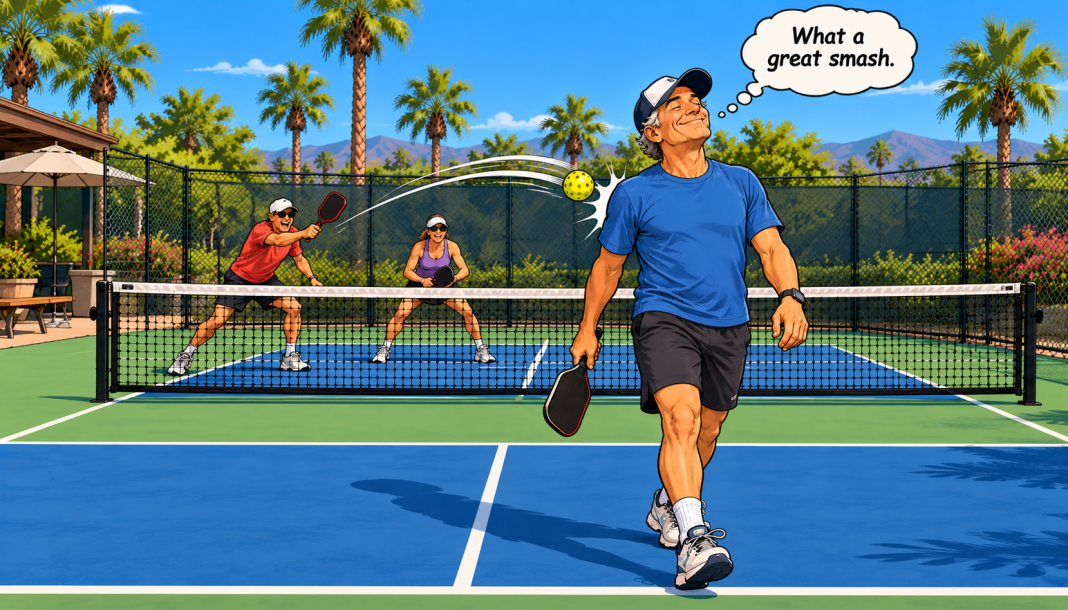
Few shots create more temptation than a high lob that you have plenty of time to hit.
You see the ball hanging above you, get into position, and decide this is your chance to end the point. You swing hard, make solid contact, and send the ball straight toward the opponents.
Unfortunately, one of them is standing exactly where you hit it.
The ball comes back.
Sometimes it comes back as another lob. Sometimes it’s a desperate block that somehow stays in play. And sometimes the opponent uses your pace to send the ball right back past you.
The Overhead Placement Drill teaches a different approach. Instead of measuring overhead success by how hard you hit, you’ll practice directing the ball into areas that are difficult for both opponents to defend.
The goal is to turn a high ball into a smart attacking opportunity, not simply an excuse to swing harder.
Why Placement Matters More Than Players Think
An overhead is one of the few situations in pickleball where you may have enough time and height to choose a genuinely offensive target.
That advantage is wasted when you hit directly toward a prepared opponent.
In doubles, two players can cover a surprising amount of court if they’re balanced and anticipating the ball. A hard overhead directed into a comfortable paddle position may be much easier to return than a controlled overhead placed away from both players.
The best target depends on where the opponents are standing.
If both are crowded toward the middle, an outside opening may be available. If one player is pulled wide, the space between them may become useful. If both have retreated deep, a shorter angled overhead may sometimes be effective, provided you can execute it safely and consistently.
There isn’t one perfect overhead target.
That’s why this drill teaches you to read the court before you swing.
Setting Up the Drill
Four players make this drill most realistic, although you can practice the basic placement work with one partner.
Two defenders stand on one side of the court. The overhead hitter begins on the opposite side, around the kitchen line or slightly behind it. A fourth player feeds manageable lobs from a safe position on the hitter’s side, away from the hitter’s swing and movement path.
The defenders begin in a realistic defensive formation, with enough space between them to create visible openings.
The feeder sends a lob that allows the hitter to move into position and hit an overhead.
Before each repetition, the defenders establish one of three formations: both near the middle, one shifted wide, or both positioned deeper in the court.
The hitter’s job is to recognize the open area and direct the overhead there.
After the overhead, the defenders try to return the ball. Stop the repetition after their first response.
Then reset.
Target One: The Open Outside Lane
Start with both defenders positioned relatively close to the middle.
Now look toward the outside portions of the court.
The hitter should aim for a broad open lane rather than trying to land the ball directly on the sideline. A controlled overhead that makes a defender move several steps can be more effective than a harder shot that travels straight toward their paddle.
This target teaches you to recognize available space without becoming obsessed with painting lines.
It also reinforces the importance of balance. If you’re still moving backward or reaching for the overhead, attempting a sharp outside target may be unnecessarily risky.
Sometimes a more conservative placement is the better choice.
Target Two: The Gap Between the Defenders
Next, have the defenders spread wider apart.
Now the middle may become the most useful target.
An overhead directed into the gap can force a quick decision about who should take the ball. Even if the defenders communicate well, the shot may make one player reach across the body or cover more ground than expected.
The middle doesn’t have to produce confusion to be effective.
It can simply be the area that neither player is comfortably positioned to defend.
This is a valuable distinction because players sometimes aim at the middle hoping opponents will collide or hesitate. Strong teams usually communicate. A better strategy is to use the space their positioning has actually created.
Target Three: The Open Court Behind a Moving Defender
For the third target, have one defender begin slightly out of position.
Perhaps they’ve moved toward the sideline after the previous ball. Maybe they’re recovering toward the middle. The hitter now has to recognize where that movement has created an opening.
This variation teaches something important: open court isn’t always a fixed location.
It can appear because a player is moving.
If a defender is running toward one side, the space they’re leaving may be more useful than the area they’re trying to cover.
But be careful about trying to hit behind someone from a poor overhead position. The shot still needs enough margin to stay in the court.
Placement works only when you can execute it.
The Hidden Lesson: Read Before You Swing
Many players decide where they’re going to hit an overhead before they look at the opponents.
They see a lob and immediately choose their favorite attacking direction.
The Overhead Placement Drill interrupts that habit.
As the lob rises, get into position first. Then take in the opponents’ locations while preparing for contact. You want to make a simple decision based on what is actually open.
Don’t stare at the target so early that you lose track of the ball, and don’t attempt an elaborate last-second change of direction.
The decision should be early enough that your swing remains controlled.
The more familiar you become with the common openings, the less complicated that decision feels.
Don’t Sacrifice Balance for a Better Angle
A high ball can make players feel as though they have to attack aggressively.
But a lob that pushes you backward may leave you in a poor position for a sharp overhead.
If you’re reaching behind your head or falling away from the ball, the best choice may be a safer overhead directed deep into the court. If you cannot reach the ball safely in the air, let it bounce and play the next shot.
The drill should teach you to recognize when placement is available, not encourage spectacular attempts from bad positions.
A controlled overhead that keeps your opponents defending is often more valuable than a risky winner attempt.
Common Mistakes
The biggest mistake is treating every overhead as a power contest. The harder you swing, the more difficult it can become to control direction and recover for the next ball.
Another mistake is aiming too close to the sidelines. You don’t need to hit a perfect line to make an opponent move. Use broad targets with margin.
Players also sometimes focus on only one defender. In doubles, the other player may be positioned to cover the opening you thought you saw. Read both opponents before choosing the target.
Don’t forget recovery after contact. An overhead may not end the rally, and your next position should depend on where you hit and what the defenders can do with it.
Finally, avoid unrealistic feeds. The drill works best when the lobs resemble balls you could actually attack in a match, not impossibly high tosses that give you unlimited time to choose a target.
Beginner Variation
Begin with one defender and two broad target areas.
The feeder sends manageable lobs, and the hitter alternates between the two targets. Focus on balanced contact and directional control rather than power.
Once the hitter can place the ball consistently, add the second defender.
Intermediate Variation
Use two defenders in predetermined formations.
Before each lob, the defenders establish one of the three positions described earlier. The hitter reads the formation and aims for the most useful open area.
A successful overhead must land in the intended open space or force a defender to move significantly to reach it.
After ten repetitions, rotate positions.
Advanced Variation
Allow the defenders to change position while the lob is in the air.
The hitter must recognize the developing opening rather than relying on a static formation.
After the overhead, play the rally live. The defenders can block, lob again, or attempt to reset the point.
Now the hitter must combine placement with recovery and be prepared for the next ball.
A Simple 15-Minute Session
Spend the first three minutes hitting controlled overheads into broad left and right targets. Establish your timing and balance before adding decision-making.
For the next four minutes, use two defenders in predictable formations. Read their positions and choose the open target.
Spend another four minutes allowing the defenders to shift before the overhead. The hitter must adjust the target accordingly.
Use the final four minutes for live rallies after the overhead.
Pay attention to the overheads that produce weak replies. Were they necessarily the hardest shots? Or were they the ones that forced the defenders to move, reach, or communicate under pressure?
That answer is what the drill is designed to reveal.
Final Thought
An overhead is an opportunity to take control of the point.
But control doesn’t come only from power.
It comes from seeing where the opponents are, recognizing the space they cannot comfortably cover, and putting the ball there with enough accuracy to make them defend.
The Overhead Placement Drill teaches you to make that decision before you swing.
Because the best overhead isn’t always the one that makes the loudest sound.
It’s the one neither opponent can reach.