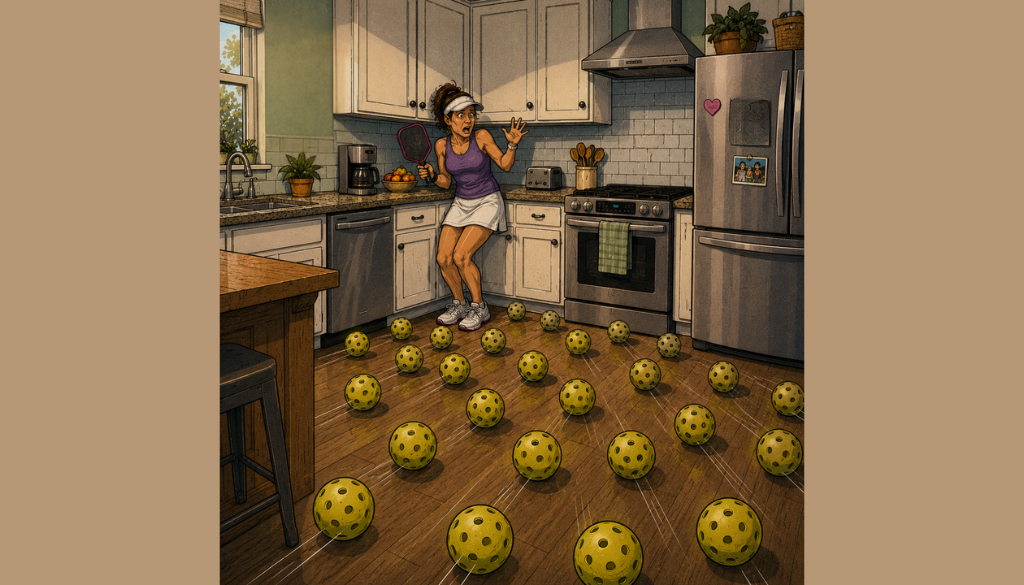


You wake up the morning after pickleball and every step reminds you that yesterday was a good day on the court.
Your legs feel tight. Your hips are slow to loosen up. Getting out of a chair takes a little more effort than usual. It is a feeling almost every player recognizes, but it does not always mean the same thing.
Sometimes it is normal muscle soreness after exercise. Other times, the stiffness has more to do with what happened after the last game than what happened during it. Understanding the difference can help you recover more comfortably and get back on the court sooner.
Why It Happens
Pickleball asks a lot from the body. Every game is filled with quick starts, sudden stops, lunges, squats, and changes of direction. Even players who are on the court several times a week can wake up feeling stiff after a particularly long or demanding session.
One of the biggest reasons is simply doing more than the body has recently been asked to do. Maybe the games were especially competitive. Maybe friends kept arriving and it was too much fun to leave. A normal 90-minute session quietly turned into three hours.
That does not necessarily mean an injury occurred. It often means the body is working to recover from a workload that exceeded what it had been prepared for.
What happens after leaving the courts matters, too. Many players finish playing, climb into the car for a long drive home, then spend the evening sitting. Muscles and joints that were moving constantly suddenly stay in one position for hours. By the next morning, everything can feel tighter than expected.
The Best Response
The first instinct is often to take the next day completely off and avoid moving until everything feels normal again.
Gentle movement is usually a better choice.
A short walk, an easy bike ride, or a few minutes of light mobility exercises help restore comfortable movement without placing additional stress on sore muscles. The goal is not another workout. The goal is simply to keep the body from becoming even stiffer.
Recovery also begins before leaving the facility. Drinking enough fluids, eating a balanced meal that includes both protein and carbohydrates within a couple of hours after playing, and getting a good night’s sleep all support the body’s recovery process. None of those habits is a cure by itself, but together they can make a noticeable difference after a long day of pickleball.
The Mistake
One mistake shows up over and over again. Players wait until they feel completely better before moving again.
If the stiffness is simply a normal response to exercise, complete inactivity often makes it linger. Getting up regularly, taking a few short walks, or spending a few minutes doing easy mobility work throughout the day is usually more helpful than staying planted in one chair or trying to stretch everything at once.
As the body adapts to regular play, recovery becomes easier and those stiff mornings become less frequent.
When to Pay Closer Attention
Typical post-exercise soreness should gradually improve over the next couple of days.
Sharp pain, significant swelling, an inability to bear weight, or symptoms that continue getting worse instead of better deserve medical attention rather than another trip to the pickleball court.
Final Thoughts
Feeling stiff the day after pickleball is usually a sign that the body is adapting to the demands of the game, not that something has gone wrong.
Playing a little longer than usual, asking more from the body than it was ready for, or skipping some basic recovery habits can all leave players moving a little slower the next morning. Fortunately, the body adapts remarkably well. With consistent play, sensible recovery, and a little movement on the day after, those stiff mornings often become much less common.