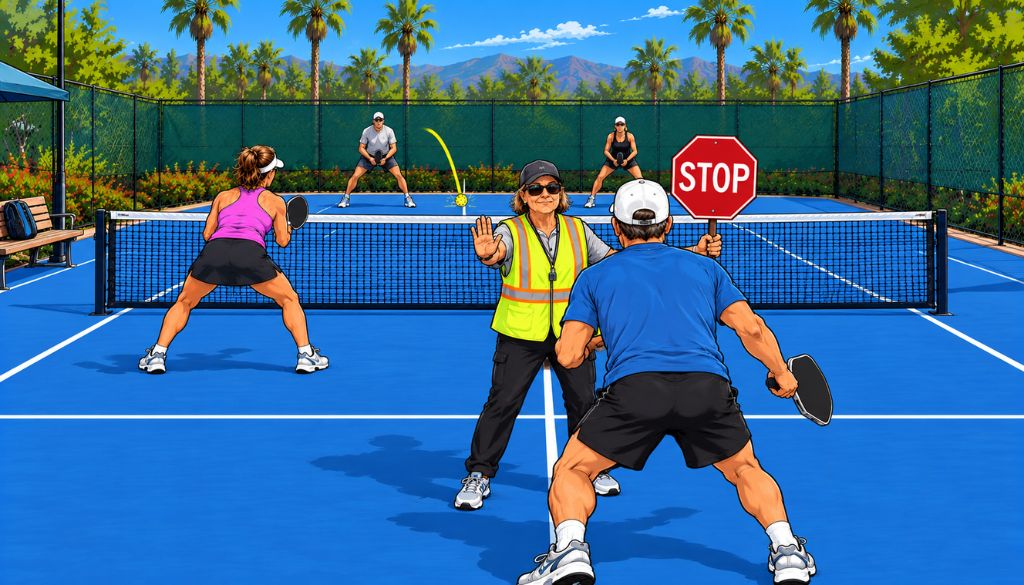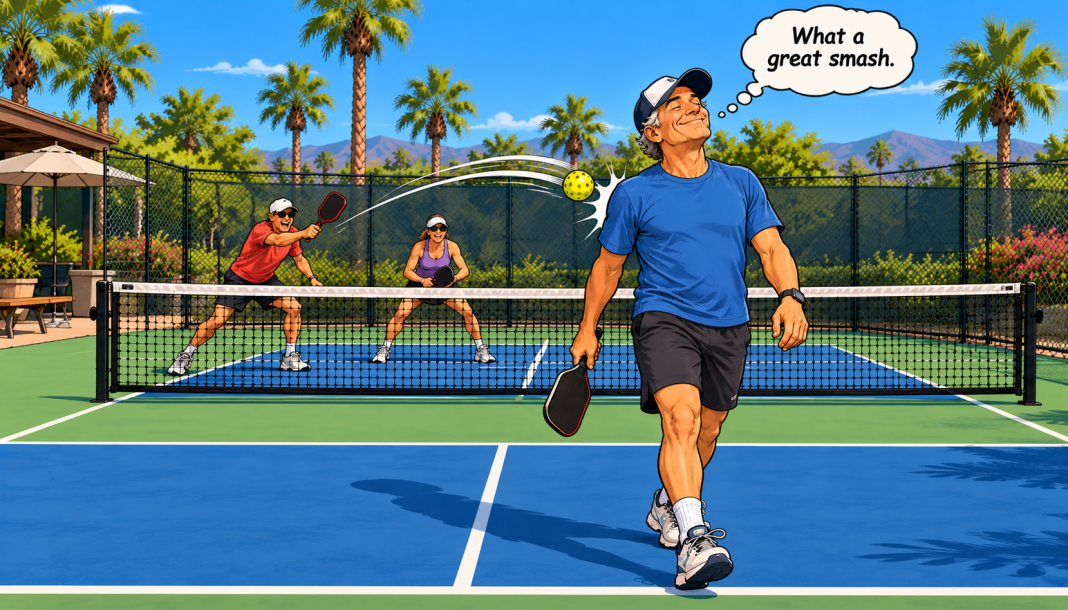


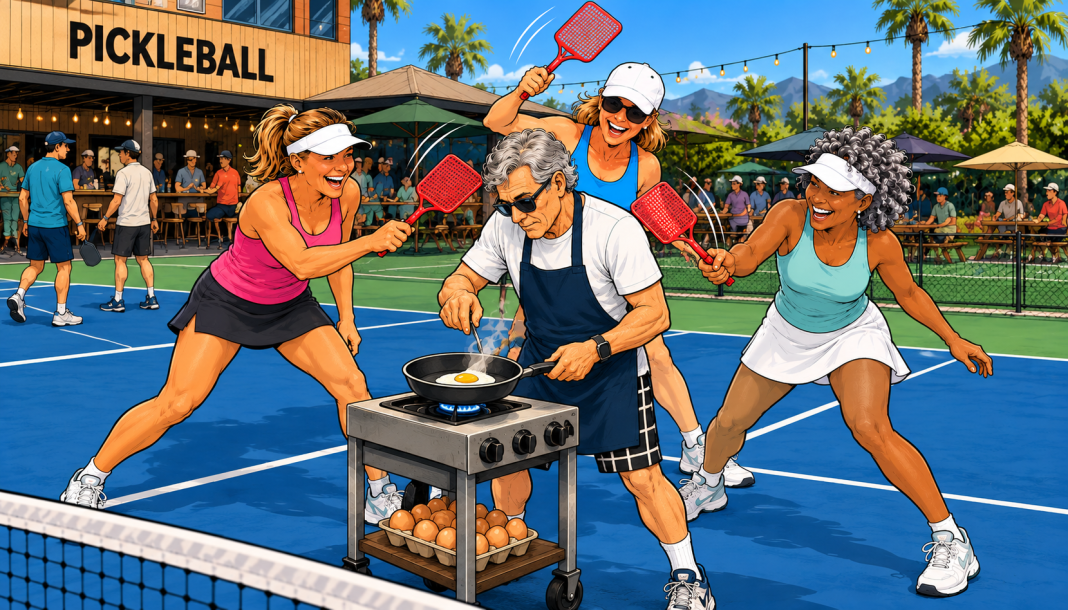
There is a particular kind of frustration that comes from playing against a good poacher. A player hits what seems like a perfectly reasonable crosscourt dink, only to have the opponent’s partner reach across the middle and put the ball away. A return that should have been safe gets intercepted. Even a decent third-shot drop can suddenly become an attacking opportunity.
After a few of these points, players begin worrying about where the poacher is standing instead of concentrating on their own shots.
Poaching is a legitimate and effective doubles strategy. An aggressive player moves into a ball that would normally be handled by their partner, often looking to intercept it before the opposing team can react. Good poachers read patterns, anticipate direction, and take advantage of balls that are high enough to attack.
The key to beating them is understanding what makes poaching possible. Once those conditions change, the aggressive player has a much harder time taking over the rally.
1. Make the Poacher Respect the Line
Most poachers love the middle of the court. It gives them opportunities to intercept crosscourt shots and attack balls that pass between opponents.
But moving toward the middle comes with a cost. It can leave space behind the poacher, particularly along the sideline.
A well-placed ball down the line can make an aggressive poacher think twice about moving early.
Consider a crosscourt dink exchange. One opponent begins leaning toward the middle, anticipating another crosscourt ball. If the next dink can be redirected safely down the line, that opponent may have to scramble back toward the sideline.
The important word is safely.
A down-the-line dink has less court distance available than a crosscourt dink and can be difficult to execute from a stretched position. Trying to squeeze the ball just inside the sideline is unnecessary. A controlled change of direction with reasonable margin is usually a better choice.
This tactic works best when the player is balanced and contacting the ball comfortably in front of the body. From a difficult position, continuing the crosscourt exchange may still be the smarter option.
The objective is not necessarily to hit a winner. Making the poacher defend the space they have been leaving open can reduce their willingness to gamble on the next ball.
2. Keep the Ball Below Their Attacking Height
A poacher cannot do nearly as much damage with a ball that stays low.
Many successful poaches begin with an opponent sending a ball that sits up around net height or higher. The aggressive player recognizes the opportunity, moves across, and attacks before the intended receiver can make contact.
A lower ball changes that equation.
A crosscourt dink that clears the net with a controlled arc and lands near the kitchen line can be difficult to intercept aggressively. Even if the poacher reaches it, the ball may be below net height, limiting the available attacking options.
The same principle applies to third-shot drops and resets. A ball that stays low as it reaches the opponent gives an aggressive player fewer opportunities to take it out of the air and drive it toward an opening.
This does not mean every shot should barely clear the net. Excessively low trajectories increase the risk of hitting into it. Players still need enough margin to make the shot consistently.
The goal is to avoid giving the poacher a comfortable contact point.
It is also worth remembering that a low ball can still be intercepted. A skilled player may reach across and play a controlled volley. But forcing a neutral or defensive contact is much better than offering an easy putaway.
3. Use the Space the Poacher Leaves Behind
An aggressive poacher creates an opportunity simply by moving out of position.
Suppose one opponent repeatedly crosses toward the middle to intercept balls. That movement leaves another part of the court less protected. Depending on the formation, it may be the sideline, the space behind the moving player, or an area that their partner now has to cover.
Players can take advantage by watching the poacher’s movement before choosing their next target.
For example, when an opponent begins moving early toward the middle during a dink rally, a controlled ball into the space being vacated may force a difficult change of direction.
A poacher who commits too soon can also be vulnerable to a well-timed ball behind their movement. The player has already shifted weight in one direction and must reverse course to reach the shot.
This is different from simply hitting every ball away from the poacher. An opponent who knows the ball will always go elsewhere can become even more aggressive about anticipating it.
A mixture of safe middle balls, occasional changes of direction, and well-placed shots toward open space makes the pattern harder to predict.
There is one caution. Trying to exploit every opening can lead to low-percentage shots. A player reaching for a difficult dink should not attempt a sharp directional change simply because the poacher moved.
The opportunity is useful only when the ball can be played with reasonable control.
The Mistake: Trying to Beat the Poacher With Speed
After several interceptions, players often respond by hitting harder. The idea is to send the ball past the aggressive opponent before they can react.
Sometimes that works. More often, a hard ball delivered at a comfortable height gives a good poacher exactly the exchange they want.
Aggressive net players are usually prepared for fast volleys. A predictable drive toward their paddle can be easier to attack than a controlled ball that forces them to reach down or change direction.
The better response is to make the poacher less comfortable with the available choices.
A low ball limits attacking options. A change down the line makes the player protect more court. A ball directed into an opening punishes an early commitment.
Those adjustments make poaching a more difficult decision.
Drill: Make the Poacher Move
Set up a doubles practice with one player designated as the poacher. That player begins at the kitchen line and is encouraged to move toward the middle whenever an opportunity appears.
The opposing team plays cooperative dink rallies, concentrating on three choices: a controlled crosscourt dink, a safe down-the-line change of direction, or a low ball that makes an aggressive interception difficult.
The poacher should actively look for opportunities rather than simply standing still.
After several rallies, switch roles so everyone experiences both sides of the situation.
For an added challenge, award the attacking team an extra point when a successful change of direction forces the poacher to recover toward the sideline.
The drill teaches players to recognize the movement that creates an opening without feeling obligated to attack it every time.
Final Thoughts
A good poacher can make the court feel much smaller. Balls that normally reach their intended target suddenly disappear, and ordinary shot choices begin to feel risky.
But poaching depends on anticipation, positioning, and the ability to attack the intercepted ball.
Players who keep the ball low, make the poacher defend the sideline, and recognize the space left behind can reduce those advantages.
The goal is not to stop every interception. It is to make the opponent think twice before leaving their position.
Once the poacher has to respect more than one possibility, the rest of the court begins to open up again.